
The Solace
ADHD Protocol™
Understanding the biology beneath focus, signal, and clarity.
Educational Disclaimer
This guide is for educational and informational purposes only.
The Solace ADHD Protocol™ is not medical advice and is not intended to diagnose, treat, cure, or prevent ADHD, ADD, or any other medical condition.
The information in this guide should not be used to start, stop, change, or avoid any medication, peptide, nootropic, supplement, or treatment plan.
Peptides, nootropics, supplements, medications, and advanced wellness tools can affect each person differently and may carry risks or interact with other treatments.
Always speak with a qualified healthcare professional before making decisions about your health, medication, peptides, nootropics, supplements, or care plan.
Table of Contents
Your Brain Is Not Broken
Confusion has become the modern standard in focus, just as it has become the standard in beauty.
We live in an era of planners, productivity apps, diagnoses, medications, and morning routines. Yet many women have never felt more disconnected from their own minds. You may know exactly what you need to do. You may have the list, the calendar, the reminders, and the deepest intention, and still, something inside you does not move.
Perhaps you can focus for hours when something feels exciting, creative, or emotionally charged. But when the task is simple, repetitive, or low-reward, your brain feels like it shuts the door.
The Problem is Not Your Character
That experience can be confusing. It can feel embarrassing. It can make you question your discipline, your intelligence, and your ability to trust yourself.
At Solace Beauty, we look at that pattern differently. We do not believe focus is merely a mindset issue, and we do not believe inconsistency automatically means laziness. A woman should not spend her life blaming herself for symptoms she has never been taught to understand.
Focus as a Biological Signal
ADHD and ADHD-like patterns are often spoken about as attention problems. But attention is only the visible symptom, the "beauty signal" of the mind. Underneath it lives the internal terrain: brain energy, mitochondrial strain, inflammation load, gut-brain communication, and dopamine signaling.
Focus is not just a mindset. Focus is biology.
Your brain does not live separate from your body. It depends on a complex symphony of fuel, oxygen, glucose, hormones, and cellular energy.
- When those systems are strained, the mind feels scattered.
- When the body is inflamed, the brain feels noisy.
- When the brain is starving for energy, boring tasks feel heavier than they should.
From Guesswork to Restoration
The problem is not that you need more shame or another surface-level fix. The problem is that you need a deeper understanding of the biology beneath the pattern.
Your brain is not broken. It may be starving for support.
This guide was created for the woman who is tired of guessing, the woman who has tried harder, masked better, and organized more, yet still feels like the root cause is being ignored. We are here to help you stop chasing temporary control and start understanding the system.
At Solace Beauty, we believe transformation begins when the guesswork ends. When the body is given the right signal and the necessary substrate, the mind stops feeling like a battlefield.
Clarity is something you build from the inside out.
The Lived Experience
Symptoms, recognition, and the language of your own attention.
You Are Not Lazy: What ADHD Really Is
"Self-blame often fills the gap where biological understanding is missing."
You may know the feeling of standing in a room, knowing exactly what needs to be done, yet feeling entirely unable to begin. You might have spent years blaming yourself for a perceived lack of discipline or wondering why tasks that seem simple for others require an exhausting amount of mental effort from you.
At Solace Beauty, we look at these patterns differently.
The first step toward supporting your system is removing the weight of shame. Focus is not a moral virtue; it is a biological skill. What has often been labeled as "laziness" or "inconsistency" is, in reality, a specific biological attention pattern. Understanding this distinction is where your restoration begins.
ADHD and the Attention System
In the medical literature, we distinguish between two primary components of our cognitive experience: the ability to focus and the ability to rule out distraction. While these two functions are closely related, they are not identical.
ADHD, Attention Deficit Hyperactivity Disorder, is better understood as a difficulty in selecting, sustaining, and filtering attention. This is particularly true when a task does not offer a natural, immediate sense of reward. It is not that the brain is incapable of focus; in fact, many individuals with ADHD experience "hyper-focus" on topics they find deeply intriguing. Rather, the challenge lies in the regulation of that focus, the ability to direct the mind toward a specific target and filter out the "noise" of the environment.
A Matter of Clarity: The Role of Diagnosis
While many women recognize these patterns within themselves, it is essential to distinguish between having a "constellation of symptoms" and a clinical diagnosis of ADHD.
Because terms like concentration and impulse control are somewhat subjective, and because our attention can fluctuate based on how we slept or the stress we are carrying, a formal diagnosis is a delicate process. A clear and real diagnosis of ADHD should be carried out by a qualified professional, a psychiatrist, a physician, or a well-trained clinical psychologist.
Professional clarity is not about being "labeled"; it is about gathering the right information to create an effective support map for your unique nervous system.
The Evolution of the Map: ADD vs. ADHD
If you grew up hearing the term "ADD" (Attention Deficit Disorder), you are not alone. Records of attention struggles have existed in medical literature since at least 1904. However, in the mid-1980s, the psychiatric community began to realize that children and adults who struggled with attention often displayed a specific kind of "hyperactive" or impulsive energy as well.
As the map of the brain became clearer, the terminology evolved. Today, ADHD is the standard term used to describe this spectrum, acknowledging that the "hyperactivity" can be physical, but it can also be a quiet, internal restlessness of the mind.
Biological Inheritance
ADHD is a family pattern. It has a strong genetic component, meaning it is a biological predisposition rather than a result of your environment or upbringing.
The data on this is striking: if an identical twin has ADHD, there is an approximate 75% probability that the other twin will as well. We see similar patterns among parents and siblings. This reinforces the fact that the attention system you were born with is a physiological reality.
It is a biological inheritance, a predisposition that influences how your brain wires up and uses chemicals. Understanding that this is part of your biological terrain allows you to stop fighting against your nature and start working with it.
The Intelligence Myth
One of the most damaging misconceptions about ADHD is that it is somehow linked to intelligence or IQ.
Science is very clear: ADHD has nothing to do with how smart you are. It is not a measure of your emotional intelligence, your musical talent, your spatial reasoning, or your capacity for brilliant thought. There are high-functioning individuals with ADHD in every field imaginable.
Focus is a skill of the nervous system; it is the "machinery" used to deliver your intelligence to the world. A struggle with the machinery does not mean the mind itself is lacking.
The Great Attention Disruptor: Modern Context
Even for those who do not have a clinical diagnosis of ADHD, focus feels harder than ever before. We live in an era of "constant context switching."
Modern factors, specifically smartphone use, constant media streams, and chronic stress, may contribute to ADHD-like symptoms in adults, including people who may not have shown clear symptoms in childhood. Our brains were not designed to process thousands of bits of information, colors, and rapid-fire notifications every hour. This digital bombardment places a significant strain on our biological capacity to sustain attention.
Whether your struggles are lifelong or induced by the pace of modern life, the result is the same: an overtaxed attention system.
The Path Forward
The most important takeaway is this: the attention system is not static. It can be supported, trained, and improved.
Your brain possesses an incredible capacity for change. By understanding the neurochemicals that drive your focus and the behavioral tools that can "rewire" these circuits, you can make heightened levels of focus more accessible.
You are not broken, and you are not lazy. You are simply learning the language of your own biology.
The ADHD Symptom Map: Hyperfocus, Time Blindness, Working Memory, and the Pile System
If Chapter 1 helped remove the weight of shame, Chapter 2 is about recognition. For many women, the experience of ADHD feels like a series of contradictions: being capable of intense brilliance in one moment and feeling completely paralyzed by a simple email the next.
This inconsistency is not a failure of character. It is a biological map. By understanding the specific ways ADHD manifests, across attention, time, space, and memory, we can move away from judgment and toward a more intelligent way of supporting the system.
The Anatomy of Focus: Attention vs. Impulse Control
In our daily lives, we often use words like attention, focus, and concentration interchangeably. For our purposes, they describe the same core function: the ability to direct your mind toward a specific target.
However, there is a separate and equally vital function called impulse control. While focus is about what you lean into, impulse control is about what you keep out. It is the brain's ability to limit perception, suppress competing inputs, and keep attention on the chosen target.
For those with ADHD, the system often struggles with this "filtering." You are not only trying to focus; you are fighting a constant battle to suppress sensory and emotional inputs, the hum of the refrigerator, a conversation in the next room, or a sudden flicker of annoyance, that your brain is failing to filter out.
Hyperfocus: The Power of Interest
The most common myth about ADHD is that it represents a total inability to focus. This is simply not true.
Individuals with ADHD are capable of obtaining heightened, even "hyper-focused" states of attention. The proof lies in the things you naturally love. If you find yourself losing hours to a creative project, a compelling book, or a complex problem you find intriguing, you are witnessing your focus capacity in action.
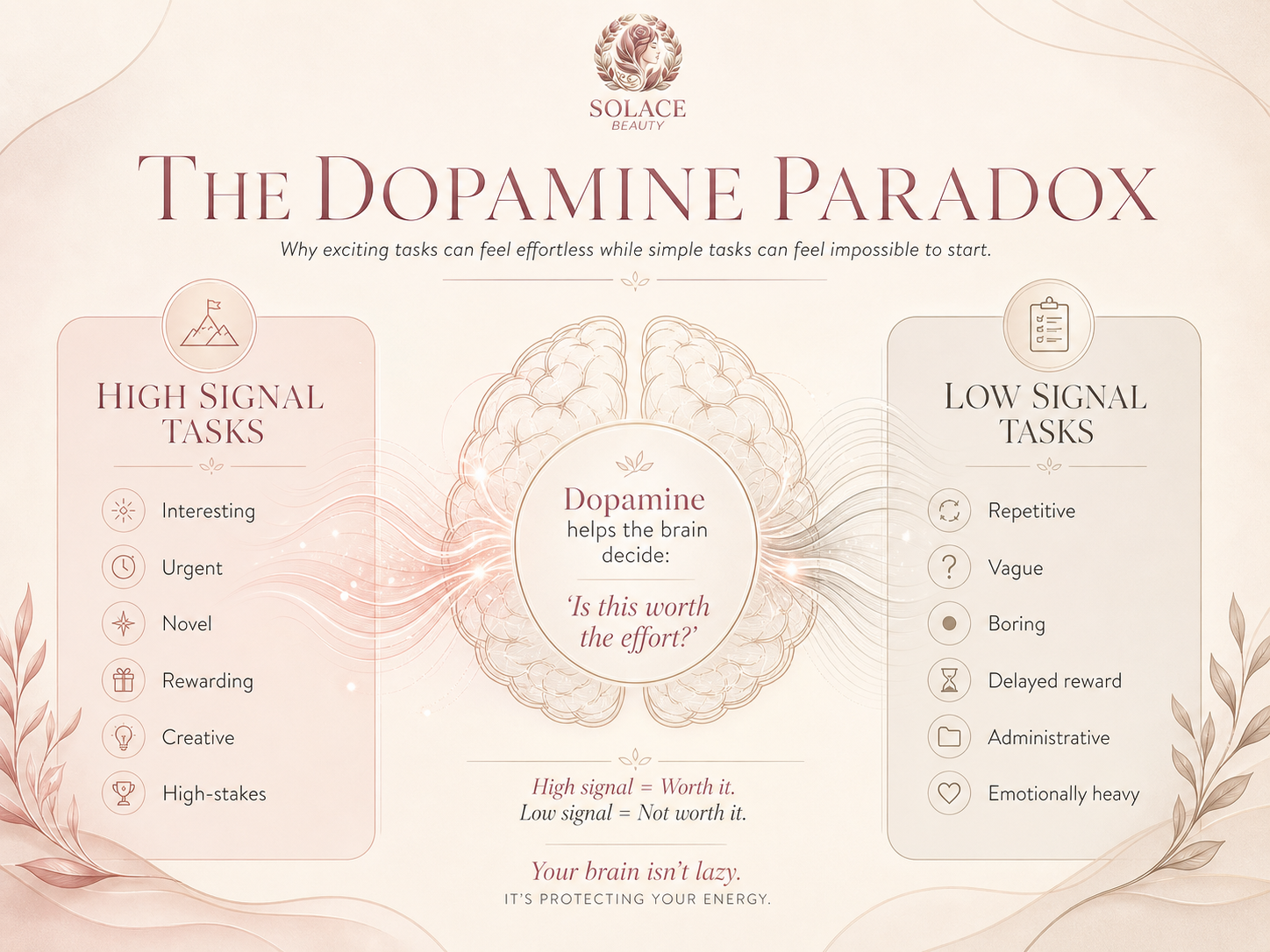
The challenge is not a lack of focus, but a difficulty in directing it. Low-reward tasks, the mundane details of life, require significantly more internal effort to engage attention because they do not naturally recruit the same level of interest, curiosity, or stimulation. When a task is naturally rewarding, the ADHD brain can engage with a depth of focus that is often superior to the average.
Time Perception and the Deadline Effect
One of the most profound symptoms of ADHD is a distorted sense of time perception. This often manifests as chronic lateness, procrastination, or an inability to accurately estimate how long a task will take.
For the ADHD system, time often feels like it exists in two states: Now and Not Now. This cognitive pattern means that until a deadline or a consequence feels severe and immediate, the brain may struggle to engage its attentional machinery.
Procrastination, in this context, is not a delay of "laziness." It may reflect the brain's difficulty engaging attention until the consequence becomes immediate enough to create a necessary sense of urgency. When the stakes are high enough, the system finally "clicks" into focus.
Spatial Logic: The Pile System
Physical space often mirrors the internal state of attention. Many individuals with ADHD rely on what is known as the Pile System for organization.
Instead of traditional filing, you may find yourself creating piles of belongings or papers that follow a categorization system known only to you. While this may look like disorganization to an outsider, it is often a functional attempt to keep important items within your visual field. The difficulty arises when the system becomes practically overwhelming, where moving a single item can disrupt your entire mental map of where things "live."
Working Memory: The Mental Scratchpad
It is a common frustration: you can remember a conversation from three years ago with perfect clarity, but you cannot remember the four-digit code you were told ten seconds ago.
This is the difference between long-term memory and working memory. Working memory is the "online" space in your mind where you hold and recycle information for immediate use. In ADHD, this "mental scratchpad" is often disrupted. You may find it difficult to hold a string of numbers, a set of instructions, or the specific reason you walked into a room.
This is not a sign of cognitive decline; it is a specific disruption in how your brain keeps information "active" in the short term.
A Spectrum of Experience
ADHD does not look the same for everyone. It is a constellation of symptoms that can appear in different combinations and levels of severity. You may struggle deeply with time perception but have a highly functional working memory, or you may be remarkably organized in space but struggle with intense distractibility and emotional reactivity.
Recognizing these patterns is not about checking boxes for a diagnosis; it is about identifying exactly where your unique system needs more support.
Now that we see the symptom map, we can look underneath it: how attention works, how perception is selected, and why filtering the world is part of focus.
The Biology of Focus
Perception, dopamine, signal-to-noise, and brain networks.
Attention Is Perception: Focus, Impulse Control, and Sensory Filtering
To understand why focus can feel so elusive, we must first look at how the brain interacts with the world. We often think of focus as a force we exert, but biologically, focus is a matter of perception.
In every moment, your body is receiving a constant stream of sensory information. Right now, you are sensing the temperature of the air, the texture of your clothing against your skin, the subtle hum of background noise, and the varied light in the room. Your nervous system is sensing all of these things simultaneously, but you are likely only perceiving a small fraction of them.
Sensing vs. Perceiving
There is a distinct biological line between sensing and perceiving. Sensing is the passive reception of information by your eyes, ears, and skin. Perceiving is what the brain selects for attention.
Attention is the process of deciding which of those sensations get to cross the threshold into your conscious mind. If you are listening to a friend in a crowded cafe, your ears are sensing every voice in the room, but your brain is selecting only your friend's voice. That selection is focus.
Attention as the Selected Signal
Focus is not just "thinking hard." It is the biological act of selection. It is the process of the brain identifying a specific signal and elevating it above the rest of the sensory environment. For those with ADHD-like symptoms, this selection process is often less stable. Instead of a single, clear signal being elevated, the brain may struggle to choose one, or it may shift between signals too rapidly.
Impulse Control as Limiting Perception
While focus is about what you select, there is a separate but related process called impulse control. If focus is the ability to select a signal, impulse control is the ability to suppress the "noise."
Focusing and ruling out distraction are related but separate processes. To focus effectively, you must be able to do two things at once:
- Direct attention toward your chosen target.
- Limit perception by suppressing competing sensory events.
This second part requires an active kind of filtering. It is the act of "putting the blinders on" to the rest of the world. In the ADHD system, these blinders are often porous. You may be trying to focus, but your brain is failing to suppress the sensory impulses from the environment, a car passing outside or the visual clutter on your desk. When your brain cannot filter these competing inputs, your attention is pulled away not by a lack of will, but by a machinery of perception that is under-supported.
Dopamine, Motivation, and the Low Dopamine Hypothesis
If attention is the lens, dopamine is the chemical that adjusts it. To understand focus, we must move beyond the wellness-culture definition of dopamine as a simple "pleasure" chemical. In the brain, enjoyment and curiosity have a specific neurobiological signature, and that signature is dopamine.
Dopamine as a Neuromodulator
Dopamine is a neuromodulator. This means it doesn't just pass a message from one neuron to another; it changes the activity of entire brain circuits. It alters the way these circuits wire up and communicate, creating a heightened state of focus.
Narrowing the Field of Attention
Dopamine physically changes how you perceive the world. When dopamine is released, it tends to contract your visual and auditory world. It narrows your focus into a tunnel, allowing you to pay attention to specific things outside the confines of your skin, a process called exteroception. This narrowing is what allows for pursuit, wanting, and curiosity. It is the chemical drive that directs your attention toward goals.
Curiosity, Pursuit, and Hyperfocus
This explains the phenomenon of hyperfocus. When you are deeply intrigued or curious, dopamine signaling is more naturally engaged. This naturally narrows your focus, making it easy to ignore the outside world. People with ADHD-like symptoms are often capable of incredible depth of focus because their systems can produce this signal when interest and curiosity are high.
The Low Dopamine Hypothesis
While dopamine can create hyperfocus, the "low dopamine hypothesis" of ADHD suggests that in certain circuits, baseline levels of this neuromodulator may be too low.
When dopamine is insufficient, it leads to unnecessary firing of neurons in the brain that are unrelated to the task at hand. This creates "noise" in your attention networks. If the chemical signal is too quiet, your neurons don't know when to stay silent. They fire when they should not, making irrelevant information feel as "loud" as the task you are trying to complete.
Signal-to-Noise: Why Boring Tasks Feel Impossible
We have established that ADHD is not "no focus." The struggle is almost never a lack of capacity; it is often a lack of consistent access to that capacity. This is most visible when comparing hyperfocus to the paralyzing weight of mundane tasks.
Weak Signal, Loud Noise
The difference between a fascinating project and a pile of admin is biological. Low-reward tasks may not naturally recruit enough dopamine, interest, or stimulation to engage attention easily.
In a high-interest task, the "signal" of the task is naturally loud and clear. But when the task is mundane, the signal is weak. Because the dopamine signal is low, the brain cannot effectively suppress unnecessary neural firing. The "noise", your thoughts, the environment, the impulse to do something else, becomes louder than the task itself.
The Effort of Forcing Focus
This creates a signal-to-noise problem. Forcing focus on a boring task feels exhausting because you are manually trying to amplify a weak biological signal while simultaneously fighting to suppress "loud" distractions. It is the difference between listening to a clear recording and trying to hear a whisper in a windstorm.
Why Urgency Creates Focus
This is also why deadlines and severe consequences are so effective for the ADHD system. High stakes can create enough urgency to engage attention more strongly, similar to the way interest or stimulation can engage focus.
One interpretation from the source is that these patterns may function as attempts to increase stimulation and support focus.
The ADHD Brain Network: Default Mode, Task Mode, and Dopamine as the Conductor
To coordinate focus, the brain relies on the choreography of large-scale networks. Two of the most important for this discussion are the Default Mode Network and Task-Related Networks.
The Idle Mind vs. The Goal-Directed Mind
The Default Mode Network is active when the brain is idle, mind-wandering, or not engaged in a specific task. In contrast, Task-Related Networks support goal-directed behavior and are responsible for suppressing impulses.
The source identifies specific regions within these networks, including areas of the prefrontal cortex, posterior cingulate cortex, and lateral parietal lobe. The names matter less than the pattern: in a focused brain, these systems need coordination and timing.
In a typical brain, these networks are anti-correlated or "out of phase." This means they function like a seesaw: when the task network is active, the default mode network should be quiet, and vice versa.
The Improper Coordination in ADHD
In the ADHD brain, these networks may become improperly coordinated. Instead of alternating, they may fire together or fail to switch cleanly. When your "idle" mind and your "goal-directed" mind are both active at once, focus feels fragmented. You are trying to work, but the "background noise" of the default mode is constantly bleeding into your task.
Dopamine as the Conductor
Preserving the source's analogy, dopamine acts like a conductor. The conductor tells each "instrument", or network, when to play and when to be silent.
In this model, supporting focus means supporting the dopamine signal and the timing between networks so the brain can move more cleanly between idle and task-directed states.
Transition into Part III
Once we understand that focus depends on signal strength and network coordination, the next question becomes clear: what happens when people try to support that signal from the outside? That is where stimulants, medication, caffeine, nicotine, sugar, and self-medication patterns enter the conversation.
Signal Support vs. System Repair
Stimulants, caffeine, and the difference between signal and capacity.
Why Stimulants Can Calm ADHD
On the surface, it seems entirely counterintuitive: why would we give a stimulant medication to someone who is already struggling with restlessness or difficulty sitting still? For someone without ADHD, these substances often produce a state of agitation or excessive "revving." Yet, for those with the ADHD biological pattern, these same compounds may improve focus, reduce impulsivity, and help the system feel more regulated.
The answer lies in how these substances interact with the attention-related circuits we explored in Part II.
The Coordination Problem
In the source's model, dopamine helps coordinate attention-related circuits. When dopamine signaling is too low, irrelevant neural activity may interfere with focus.
Stimulant medications like Ritalin (methylphenidate), Adderall, and Modafinil work by increasing the availability of dopamine and norepinephrine in the brain. By strengthening this signal, the system is better able to suppress irrelevant neural firing, allowing the brain to select a single task for perception.
Signal Support and Task Networks
These medications act as a form of signal support. They help task-related brain networks, the ones that allow you to plan, follow through, and suppress impulses, come online more effectively.
This is particularly significant in the context of childhood. Because a child's brain is highly plastic, especially early in life, medical intervention during these years can chemically induce a state of focus that helps the young brain learn what focus feels like. Under the guidance of a qualified clinician, this may allow the brain to practice and "wire in" these task-directed states.
Clinical Guidance and Understanding
It is important to emphasize that at appropriate dosages and under qualified medical care from a licensed prescribing clinician, such as a psychiatrist, physician, or appropriately licensed medical provider, many people experience meaningful relief. A well-trained clinical psychologist may be part of diagnosis and care planning, but medication decisions require a qualified prescriber.
The source also makes an important distinction between medically supervised stimulant use and recreational or non-prescribed stimulant use, which carries very different risks.
This section is not about prescribing a specific path, but about understanding the biological "why" behind these treatments. This is pro-understanding, not pro- or anti-medication. Whether for a child or an adult, decisions regarding medication are deeply personal and should always be made with the support of a medical professional who understands your unique system.
Medication, Caffeine, Nicotine, Sugar, and the Modern Focus Economy
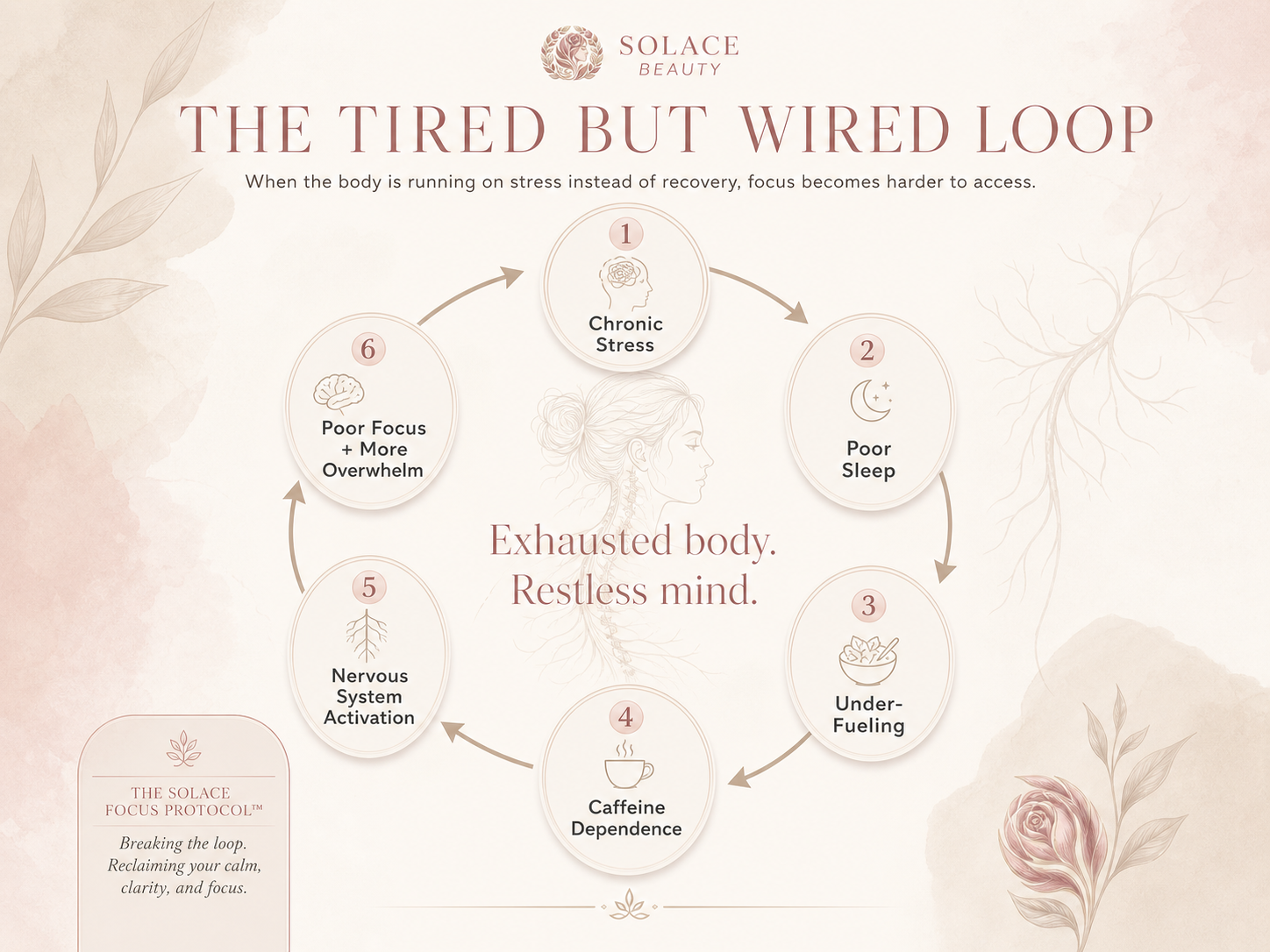
When the brain's internal signal is weak, the system often searches for an external "boost." When dopamine signaling feels insufficient to narrow focus, the system may seek stimulation to support focus and attention. This is not a failure of will. It may be a biological pattern: a system seeking stimulation when focus feels difficult to sustain.
The Search for Signal
This search for signal explains why many individuals with ADHD-like symptoms are drawn to stimulating substances.
- Caffeine: By increasing alertness, focus, and energy through the dopamine and norepinephrine systems, caffeine acts as a daily form of signal support for millions.
- Nicotine: While carrying significant health concerns, especially through smoking or vaping, nicotine is a potent stimulant of alertness and focus.
- Sugar: Especially in children, sugar can act as a rapid dopamine-inducing stimulant. While it may cause hyperactivity in a typical system, in a system with ADHD, the system may be receiving a dopamine-increasing input that temporarily changes focus or behavior.
The Modern Focus Economy
We are living in an era that places constant demands on attention and makes sustained focus harder to protect. Smartphones, emails, media streams, and social media apps create a constant "pull" on our attention. This environment often requires us to context-switch rapidly, which can make sustained attention more difficult.
In this high-pressure environment, the temptation to use chemical focus supports, whether prescribed or not, is at an all-time high. However, a stimulated brain is not always a supported brain. While these inputs may temporarily amplify the signal, they do not address the underlying terrain.
The Problem With Pushing Signal Into an Under-Repaired System
Stimulant medication and self-medication patterns (like caffeine and sugar) are all attempts to do the same thing: support the signal. When they work, the effect is real. The "signal" becomes clearer, and focus becomes more accessible.
However, we must distinguish between supporting a signal and supporting the system as a whole.
Supporting the Terrain
Medication may support signal. But signal support does not automatically repair the deeper biological terrain.
For many women, signal support alone can feel incomplete. You may feel more "focused," but you still feel exhausted, or you may notice your focus remains inconsistent. This is because pushing a dopamine signal into an energy-depleted or under-nourished system may place further strain on the biological foundation.
Exploring the Biological Foundation
Focus is a high-demand biological state. Next, we will explore the "terrain" that allows focus to happen, looking at how the following factors may modulate the attention system:
- Cellular Energy: The role of ATP in powering neurons.
- Inflammation: How a "quiet" internal environment supports signal clarity.
- Nourishment: The building blocks, such as Omega-3s, needed for healthy brain membranes.
- Metabolic Stability: The impact of blood sugar on focus consistency.
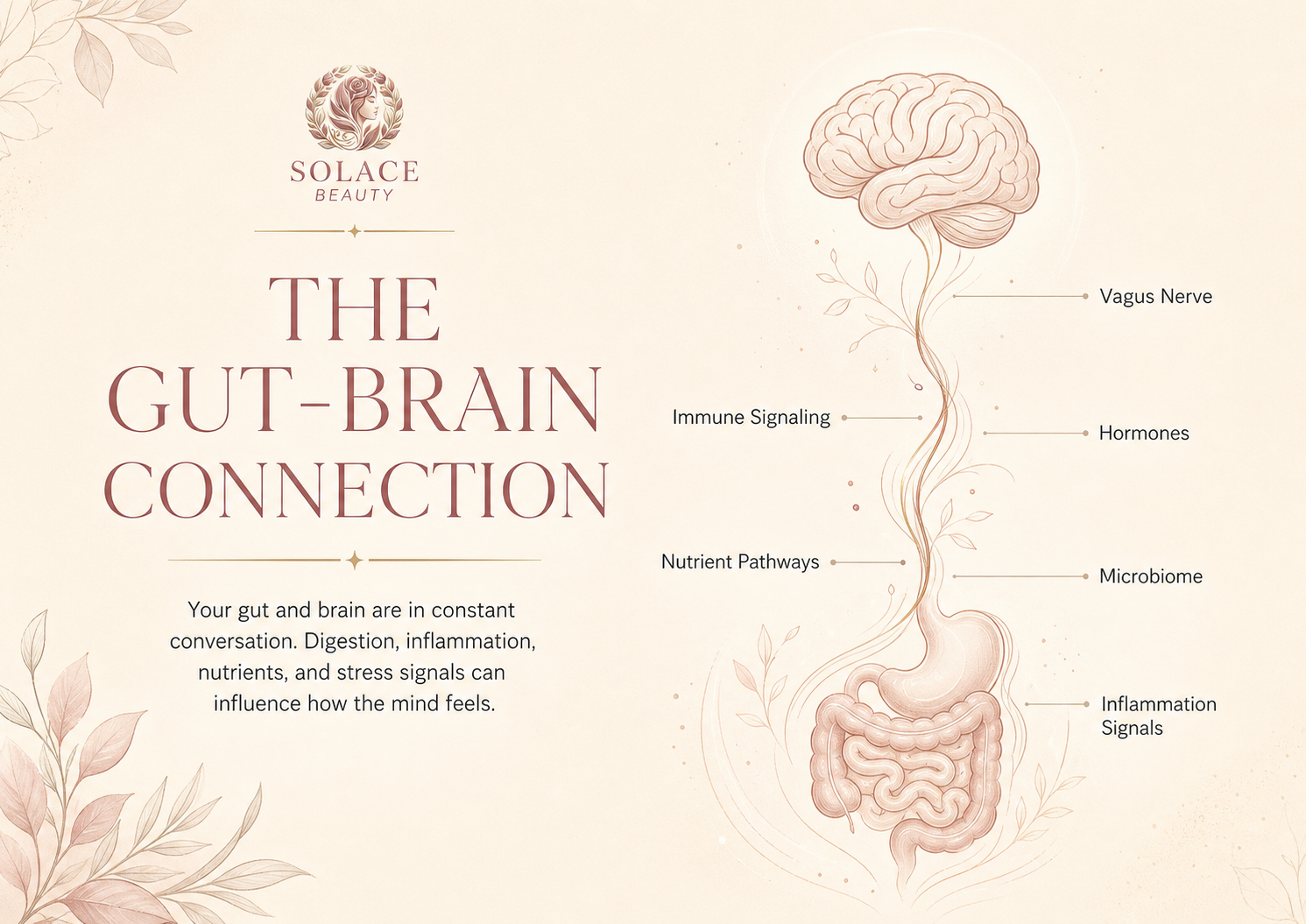
- The Gut-Brain Connection: How digestive health and food sensitivities may influence attention.
If we ignore the terrain, we are asking for performance from a system that may be asking for repair and nourishment. In the next part of this protocol, we begin looking at how to support that foundation.
Nutrition, Brain Energy and Biological Terrain
Food as information. Energy as foundation. Inflammation as noise.
Nutrition, Sugar, and Food Sensitivity
In the previous parts of this protocol, we looked at focus through the lens of signaling, how dopamine helps coordinate the brain's attention-related circuits. However, the internal environment influences how those signals are received. At Solace Beauty, we view nutrition as biological information. The foods we eat can interact with the biological terrain that supports attention, energy, and signaling.
Food as Biological Information
The foods we eat can interact with the biological terrain that supports attention, energy, and signaling. For those navigating ADHD-like symptoms, certain foods may support steadier attention for some people, while others may worsen symptoms or increase instability. Understanding this relationship helps move the conversation away from willpower and toward biological pattern recognition.
Sugar, Dopamine, and Attention
Sugar occupies a unique place in the ADHD conversation. Because sugar can act as a dopamine-inducing stimulant, many children and adults with ADHD are naturally drawn to sugary foods. In a system where dopamine signaling feels insufficient, the brain may seek sugar as a rapid way to "turn on" focus.
The source notes a fascinating distinction in how sugar affects different systems. While high sugar intake may create hyperactivity in a typical child, in a child with ADHD, it may sometimes appear to have a temporarily focusing or calming effect as the system receives a dopamine-increasing input that temporarily changes attention or behavior. However, this effect is fleeting and can lead to further instability.
Elimination Diets and Food Sensitivity
The role of food sensitivity is one of the most discussed, and controversial, areas of ADHD research. The source references a formalized study on an "oligoantigenic diet," where children eliminated specific foods based on mild allergic responses or antibodies. The study reported significant improvements in focus, impulsivity, and the ability to sit still.
While the reported effects in that study were dramatic, they have been met with criticism regarding design and interpretation. At Solace, we do not present elimination diets as a universal requirement. Instead, we recognize that for some individuals, identifying specific food triggers that worsen symptoms can be a valuable part of supporting the system. It is also important to note that these triggers can change over time as the body's terrain shifts.
Simple Sugars as a Focus Disruptor
Despite the controversies around specific elimination diets, reducing simple sugars appears to have a positive effect in many children with ADHD, according to the clinical observation discussed in the source. For adults, diet may still matter, but the conversation is more individual and less straightforward. Reducing simple sugar intake may reduce one source of stimulation and instability in the attention system.
Omega-3s, Phosphatidylserine, Sleep, and Brain Support
If sugar and food sensitivities represent potential "noise" in the terrain, healthy fats and restorative rest represent the structural integrity of the system. To sustain focus, the brain requires specific building blocks to maintain its membranes and modulate its signals.
Omega-3s and the Terrain of Attention
Omega-3 fatty acids are one important support for brain health. They are not a cure for ADHD, but they play a vital modulatory role. The source highlights EPA for mood and broader biological support, while also noting that attention-focused studies point to a threshold of about 300 mg DHA per day as an important inflection point.
Research suggests that these fats are essential for supporting membrane fluidity and the cellular environment in which signaling occurs. While the effects of Omega-3s vary between studies, they appear to support the "hardware" that allows neurochemicals like dopamine to communicate effectively.
Understanding Modulation
It is helpful to understand modulation: a supportive influence that can improve the environment around a biological process without acting as a direct cure or replacement for treatment. Modulators adjust the environment. By improving the biological terrain, Omega-3s may allow some individuals to function more effectively or support the efficacy of other interventions.
Sleep: The Master Modulator
No nutritional support can override the cost of poor sleep. Sleep is the ultimate modulator of our immune function, emotional regulation, and cognitive focus. Sleep supports the biological systems involved in attention, emotional regulation, immune function, and recovery. When we are sleep-deprived, the circuits that regulate attention become highly distractible and less resilient.
Phosphatidylserine and Brain-Cell Support
Phosphatidylserine is another compound discussed for its ability to support brain cell membranes and signaling. Some studies in children have suggested that it may help reduce symptoms of impulsivity, especially when combined with Omega-3 fatty acids. Like Omega-3s, it is a terrain-support tool rather than a miracle solution, providing the structural substrate the brain needs to hold a steady signal.
The Energy-Depleted Brain: ATP, Mitochondria, and Executive Function
Focus is not a free resource. It is a biologically demanding task. To understand why focus often collapses, we must look beyond the chemical signal and look at the energy required to fuel it.
Focus is Expensive
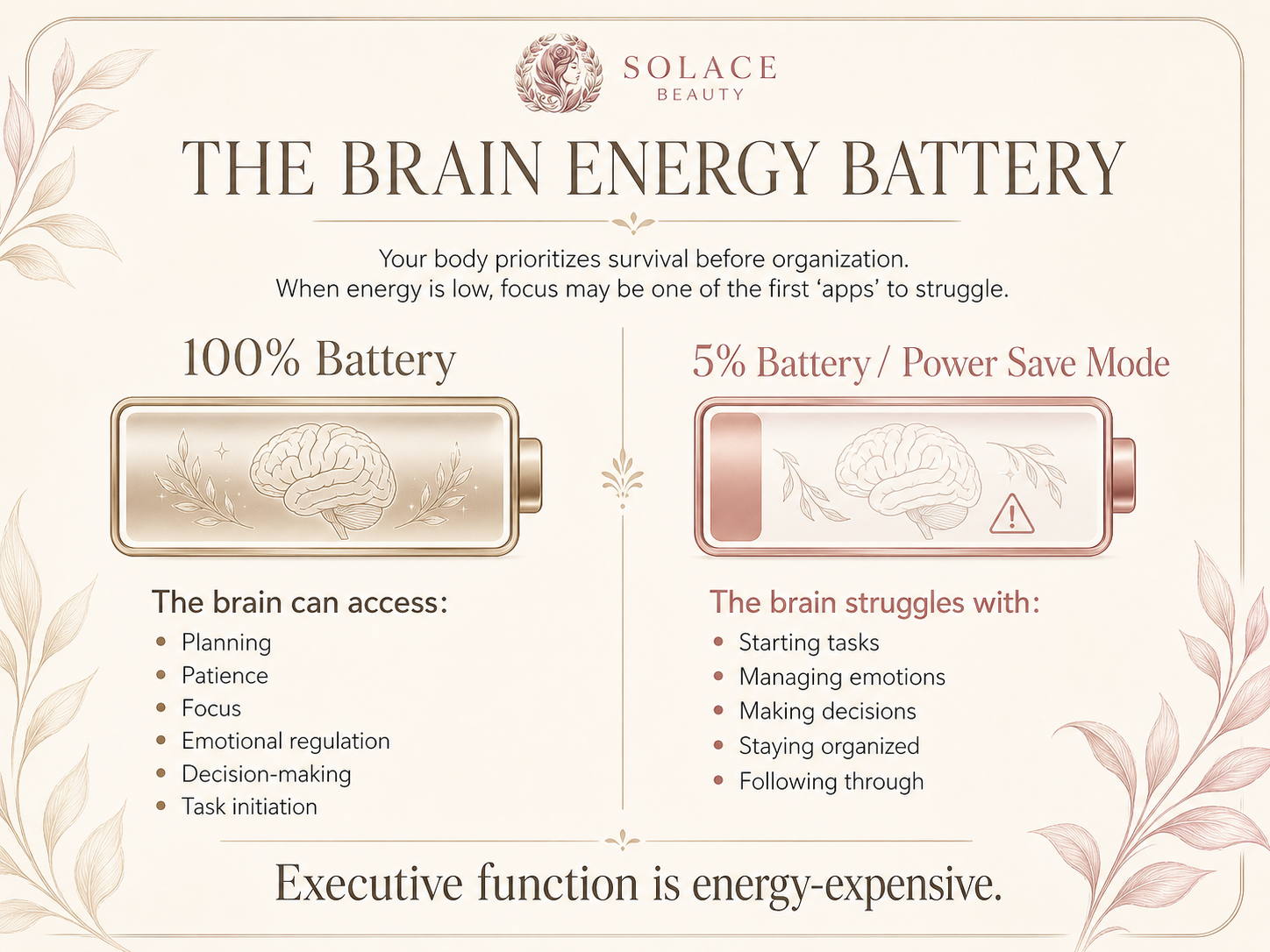
Your brain represents only about 2% of your body weight, but it consumes roughly 20% of your total energy. Specifically, the "executive function" circuits in the prefrontal cortex, the areas responsible for planning, task initiation, and follow-through, demand a high and constant supply of fuel.
ATP: The Energy Currency
Inside every cell, energy is carried in a molecule called ATP (adenosine triphosphate). ATP is the currency your neurons 'spend' every time they fire a signal. When energy availability is low, the brain may struggle to sustain deliberate focus on complex or low-reward tasks.
Mitochondria: The Energy Producers
ATP is produced by your mitochondria, the power plants of your cells. This framework suggests that some ADHD-like symptoms, especially difficulty initiating tasks or feeling "capable but stuck", may be influenced by energy-depleted neurons.
If the mitochondria are not producing ATP efficiently, the system may be in a state of "under-fueling." Even if the dopamine signal is present, the neurons may lack the energy capacity to sustain the focused state. This framework treats mitochondrial support as one possible layer of supporting executive function.
When Signal is Present but Capacity is Low
This helps explain why stimulation (like more caffeine) sometimes fails to produce better focus. If you are pushing a "start" signal into a system that lacks adequate fuel, you may experience more "jitter" without a corresponding increase in "output." Before we can optimize the signal, we must ensure the system has the energy capacity to follow the lead.
Neuroinflammation, Stimulation, and the Cost of Forcing Output
We have looked at signal and we have looked at energy. The final piece of the terrain puzzle is noise. In a focused brain, the internal environment must be quiet enough for the signal to be heard and followed.
Understanding Neuroinflammation
In the context of focus, neuroinflammation refers to a state of heightened immune activity within the brain. In this framework, neuroinflammation may create biological noise that makes signaling and focus harder to sustain. Inflammation can be thought of as a "fog" that obscures the conductor and drains cellular energy.
Signal, Energy, and Internal Noise
When neuroinflammation is present, focus becomes more costly. The brain must expend more energy to overcome the internal noise just to maintain a task. This is part of the terrain that influences focus capacity; if the background noise is too high, the dopamine signal, no matter how strong, will struggle to remain clear and effective.
The Cost of Forcing Output
Many of us are used to "forcing through", using high doses of stimulants or sheer stress to make the brain work. While stimulation can temporarily push output, it does not automatically reduce the underlying inflammation or restore mitochondrial capacity.
Forcing output from an under-repaired, noisy system comes at a biological cost. It may contribute to deeper exhaustion, emotional reactivity, or a stronger sense of recovery debt. At Solace, we believe the goal is not to "whip" the system into performance, but to reduce the noise and restore the repair capacity so focus may become less costly and more accessible.
Moving Toward Training and Repair
Once we understand the terrain beneath focus, food, sugar, fats, sleep, energy, and inflammation, we can begin exploring how the focus system can be trained and supported through behavior, movement, visual attention, and eventually the advanced systems-repair layer.
The Advanced Systems-Repair Layer
Semax, BPC-157, Cerebrolysin and the logic of repair before optimization.
Why the Solace Protocol Starts With Systems Repair
In the previous parts of this protocol, we moved from the lived experience of ADHD into the biological terrain. We established that while stimulants can support the "signal" of focus, signal support alone often feels incomplete. At Solace Beauty, we believe this is because focus does not exist in a vacuum. It sits on a foundation of energy, barrier integrity, and cellular health.
Why We Do Not Start by Forcing More Output
Many conventional ADHD support models emphasize stimulation or signal support, asking the brain to work harder by pushing more dopamine into the system. However, pushing output from an under-repaired system can create significant internal strain. If the attention circuits are energy-depleted, inflamed, or struggling with a "leaky" environment, simply adding more signal can feel like pushing an already exhausted system harder.
The Solace Protocol begins with systems repair because the goal is not to force the brain, but to support it.
Repair Before Optimization
The advanced layer is organized around a specific sequence: repair the foundation, reduce the noise, and then optimize the signal. Before we look at how to fine-tune dopamine or acetylcholine, we must ensure the brain has what it needs to function:
- Fuel: Supporting ATP production within the mitochondria.
- Oxygen and Glucose: Supporting efficient blood flow to deliver substrates to neurons.
- Integrity: Supporting barriers (gut and blood-brain) to help manage systemic inflammation.
- Plasticity: Supporting the neurotrophic factors that allow the brain to rewire its attention networks.
A Body-Intelligence Approach
This is not an anti-medication stance. It is a recognition that for many women, the "attention-only" model stops too early. By addressing the systems-level failures that manifest as focus issues, we are not just managing symptoms; we are exploring what may be recoverable when the biological terrain is restored.
Semax: Neuroplasticity, ATP, Blood Flow, and Dopamine Protection
In the advanced systems-repair framework, Semax is discussed as a specialized tool for supporting the brain's ability to repair, fuel, and protect itself. In the source logic, Semax is not treated as a simple supplement, but as a "signaling conversation" with the pathways that allow neurons to survive and thrive.
Neuroplasticity: The Growth Pathways
Semax is a heptapeptide, a chain of seven amino acids, that has been studied extensively for its role in neuroplasticity. It is discussed in relation to increasing the expression of BDNF (Brain-Derived Neurotrophic Factor). BDNF is often described as a growth-support signal for neurons, the signal that tells neurons to repair and grow new connections.
Semax also upregulates NGF (Nerve Growth Factor) and activates CREB, a protein vital for synaptic plasticity and the stabilization of attention networks.
ATP and Mitochondrial Resilience
A focus-challenged brain is often an energy-starved brain. Semax is discussed for its ability to enhance ATP production within the mitochondria. By helping neurons maintain their energy "account," it supports the executive function circuits that require a constant supply of fuel to initiate tasks and resist distraction.
Cerebral Blood Flow and Oxygen Delivery
The brain cannot produce energy without a steady delivery of oxygen and glucose. Semax is discussed for its ability to increase cerebral blood flow. The source analogy frames this as giving struggling neurons better access to oxygen and fuel. When blood flow is optimized, the delivery of substrate is improved, allowing the brain to meet the metabolic demands of sustained focus.
Dopamine-System Protection
One of the most critical aspects of Semax in a focus protocol is its potential to protect dopamine neurons from oxidative stress. By supporting the health of these neurons and reducing neuroinflammation, Semax helps improve the "signal-to-noise" ratio. It helps ensure that the dopamine the system produces is not drowned out by biological noise.
BPC-157: Barrier Repair, Tight Junctions, and Inflammation
If Semax is about growth and energy, BPC-157 is about integrity and protection. In this protocol, BPC-157 is discussed because of its relationship with the body's "barriers", specifically the gut barrier and the blood-brain barrier.
Why Barriers Matter for Focus
The brain does not operate in isolation. If the gut barrier is "leaky," fragments of bacteria (such as lipopolysaccharides, or LPS) can cross into the bloodstream. This may contribute to systemic inflammatory signaling and may place stress on the blood-brain barrier.
When the blood-brain barrier is porous, immune stimulants can enter the brain and trigger microglial activation. These are the brain's immune cells; when they are chronically activated, they create a state of "neural fire" or biological noise that makes signaling and focus difficult to sustain.
Tight Junctions and Barrier Integrity
In the source protocol logic, BPC-157 is discussed as supporting tight junctions and barrier integrity in ways that may reduce inflammatory signaling. Tight junctions are the "sealants" between cells that keep the barriers intact. In the source protocol logic, BPC-157 is discussed as supporting tight junction proteins and barrier integrity in ways that may reduce inflammatory signaling.
Nitric Oxide and Vascular Support
BPC-157 also interacts with nitric oxide pathways to support healthy vascular function. This ensures that the blood vessels are resilient and capable of delivering the nutrients and blood flow the brain needs to stay focused.
Reducing the "Fire"
Gut barrier integrity may be an important part of supporting the brain's inflammatory environment. In the source protocol logic, barrier support is discussed as one way to reduce biological noise that may interfere with focus and emotional regulation. By addressing barrier repair and reducing microglial activation, BPC-157 is framed as a tool to help "put out the fire."
Cerebrolysin, Semax, Nootropics, and Advanced Signal Support
Once the terrain is repaired and the noise is reduced, we move into the Advanced Signal-Support Layer. This is where specific nootropics and peptides are discussed as tools to fine-tune the brain's cognitive performance.
Why This Is Not a Random "Stack"
In the source's protocol, these tools are not meant to be random add-ons. They are part of a systems-recovery sequence. We do not stand on the "skinny pedal" and force a broken system harder; we rebuild the system while supporting it.
Cerebrolysin: Rebuilding the Infrastructure
In the source protocol logic, Cerebrolysin is discussed as a potent tool for neuroplasticity. It contains a complex mixture of neurotrophic factors that the source suggests may protect against excitotoxicity (neurons being "worked" to death) and enhance mitochondrial function. It is positioned as support for the building blocks, peptides, and amino acids required for neurons to survive and grow.
Semax in the Signaling Sequence
The source discusses Semax as a foundational repair tool that also acts as a bridge to signal support. By increasing BDNF expression and protecting dopamine neurons, it ensures that the environment is fertile for the cognitive supports that follow.
Alpha-GPC and Acetylcholine Support
The source discusses Alpha-GPC as a choline precursor that crosses the blood-brain barrier to support the neurotransmitter of attention, acetylcholine. It is positioned as a tool to provide membrane building blocks (phosphatidylcholine) and may support growth hormone secretion, which can be suppressed in focus-challenged systems.
Aniracetam and Oxiracetam: Membrane Fluidity
These nootropic compounds, known as Racetams, are discussed in the source protocol logic for their ability to increase cell membrane fluidity. The source discusses these in relation to upregulating AMPA receptors, which are key for synaptic plasticity and efficient signaling.
Tesofensine and Dopaminergic Optimization
The source positions Tesofensine as a monoamine reuptake inhibitor that interacts with dopamine, serotonin, and norepinephrine. Unlike traditional stimulants, the source discusses its neuroprotective aspects, such as increasing GDNF (Glial cell-derived neurotrophic factor) and reducing programmed cell death (apoptosis).
Nicotine and Alpha-7 Agonism
The source discusses Nicotine as a nootropic that activates alpha-7 nicotinic acetylcholine receptors. In the source protocol logic, this is discussed for its ability to directly stimulate dopamine neurons while promoting repair. The source emphasizes delivery method, steady activation, such as through patches, rather than a rapid 'bolus', as an important distinction in how the compound is discussed.
How the Advanced Layer Fits Into the Bigger ADHD Picture
We have journeyed from the high-level symptoms of time perception and spatial organization to the microscopic mechanics of ATP, BDNF, and tight junctions. It is here that the bigger picture of ADHD becomes clear.
The Integrated System
ADHD-like symptoms can be understood as visible signals of an integrated biological system under strain. They reflect a system where:
- Perception is difficult to select.
- Filtering may become harder when inflammation and barrier stress increase biological noise.
- Energy may be limited when ATP production and mitochondrial support are under strain.
- Coordination is fragmented because the "conductor" (dopamine) is weak.
Synthesis of the Advanced Layer
The advanced systems-repair layer is designed to address these specific constraints:
- Semax and Cerebrolysin address the fuel and plasticity constraints.
- BPC-157 addresses the barrier and inflammation constraints.
- Nootropics and Signal Tools address the clarity and signaling constraints.
Why the Foundation Still Matters
The core logic of this framework is not that the brain is broken. It is that the brain may be under-fueled, inflamed, and deprived of the conditions it needs to function well. The advanced layer is not a replacement for the foundation of nutrition, sleep, and rhythm. It is a way to re-feed the system so it can re-learn the art of focus.
Looking Ahead: Training the Focus System
Systems repair is about integration. Biology creates the conditions, but behavior helps teach the brain how to use them. Now that we understand the advanced systems-repair layer and the terrain beneath focus, the next step is training the focus system itself, using vision, movement, and behavioral tools to wire in the capacity for sustained attention.
Training the Focus System
Vision, movement, and the practice of building focus without shame.
Training the Focus System: Vision, Movement, and Behavioral Tools
We have established that the biological terrain, built on energy, signaling, and cellular integrity, is the foundation of attention. However, focus remains a dynamic skill that can be trained. In this chapter, we explore how the brain utilizes the eyes and the body's motor circuits to select, hold, and protect attention.
Why Vision Matters for Focus
In neurobiology, the eyes are far more than sensors for light; they are a physical extension of the brain. Because they are the only part of the central nervous system that resides outside the skull, how we direct our gaze directly influences our internal mental state.
There is a fundamental link between visual focus and cognitive focus. When the visual field is narrowed or contracted, the brain more naturally recruits the circuits required for deep, selective attention. Conversely, a wide, panoramic gaze helps the brain transition into a state of relaxation and "open monitoring." By using the eyes as an anchor, we can help the brain select the signal it needs to follow.
The Practice of Visual Fixation
The source discusses research in which children practiced focusing visually on a single target, such as a point on a wall or even one's own hand, before completing a task. This appeared to improve their ability to focus on subsequent tasks.
This act of visual fixation acts as a primer for the attention system. By holding your gaze on a specific location for 30 to 60 seconds, you are training the brain to select a target and maintain its "aperture" of attention, even when the environment or the task itself is not providing a high level of natural stimulation.
Blinking, Time, and Attention
Our perception of time is closely tied to our rate of blinking. Because blinking is modulated by dopamine, it acts as a subtle shutter for how we "bin" our experience. The source explains that frequent blinking, often seen in systems where dopamine signaling is lower, can contribute to a fragmented sense of time. By practicing steady visual focus and becoming more aware of blink patterns, we can begin to understand how visual attention, time perception, and focus are connected.
Movement as a Motor Outlet: The "Shuttle" Mechanism
A common misconception of focus is that it requires perfect physical stillness. For many women, particularly those with a restless or "reverberatory" quality to their nervous system, forcing the body to remain perfectly still can actually drain the energy needed for mental focus.
The source provides the analogy of a surgeon whose hands may shake during a procedure; they often learn to tap a toe or bounce a knee to stabilize their hands. This movement doesn't "release" energy, but rather shuttles activity through the motor circuits. Whether it is pacing, tapping, knee-bouncing, or another subtle movement, these motor outlets can help route activity through motor circuits in a way that may support attention.
Fidgeting Without Shame
When we understand the "shuttle" mechanism, we can view fidgeting not as a lack of discipline, but as a biological attempt to support focus. Providing the body with a subtle motor outlet, such as a fidget tool or the freedom to pace, can quiet the background noise of the motor system, allowing the cognitive circuits to stay locked on their target.
Building Focus Without Shame
ADHD is a biological pattern, not a reflection of your character or your intelligence. Yet, for many women, the primary tool used to manage focus has historically been shame. In this chapter, we look at how to move away from moral judgment and toward a biology-first relationship with your attention system.
Shame is Not a Focus Tool
We often attempt to "force" focus through self-blame. We tell ourselves we are lazy or undisciplined, hoping the internal pressure will make the system perform. However, as we learned in Part II, stress and shame increase biological noise. This "static" makes it even harder for the brain to select a clear signal and sustain it. Shame does not provide support; it creates more strain.
Observation Before Judgment
The transition to more consistent focus begins with observation. Rather than judging a "failed" attempt to focus, we look at the terrain:
- Was the signal too weak for the task?
- Was the terrain under-fueled or the inflammatory load too high?
- Did the brain struggle to switch cleanly between "idle" mode and "task" mode?
By seeing these moments as biological data points rather than personal failures, we can identify what the system actually needs to feel supported.
Building Trust with Your System
Focus is a sensitive capacity that requires rhythm and safety. Rebuilding your focus involves honoring the body's need for alternating states: allowing for periods of deep selection followed by periods of genuine rest (the "Default Mode"). Trust is built when we stop demanding the system perform in a vacuum and start providing the fuel, the signaling environment, and the training it needs to respond.
Small Practices, Repeated Consistently
Restoration is a cumulative process. You do not need to "fix" your attention system in a single session. Focus training happens in brief, manageable moments: 30 seconds of visual fixation, a brief period of still observation, or five minutes of movement before a meeting. These small acts of body intelligence help rewire the circuits over time, making focus more accessible and less costly to maintain.
Support Over Pressure
The goal of this protocol is to move from "forcing through" to "flowing with." When you support the terrain, optimize the signal, and train the system with biology-first tools, you move beyond symptom management. You are discovering what your mind can accomplish when its foundation is finally strong enough to support its brilliance.
Now that we have explored the lived experience, biology, signal support, terrain repair, advanced systems support, and focus training, we can bring everything together into the Solace ADHD Body-Intelligence Map.
The Solace ADHD Body-Intelligence Map
A clear, layered framework to navigate your unique attention system.
The Solace ADHD Body-Intelligence Map
Throughout this protocol, we have peeled back the layers of the attention system to reveal the biology beneath the symptoms. We have moved away from the idea that focus is a measure of your character and toward the understanding that focus can be understood as a signal shaped by your internal terrain.
To navigate this terrain, you do not need more shame; you need a better map. The Solace ADHD Body-Intelligence Map is designed to synthesize everything you have learned into a clear, organized framework.
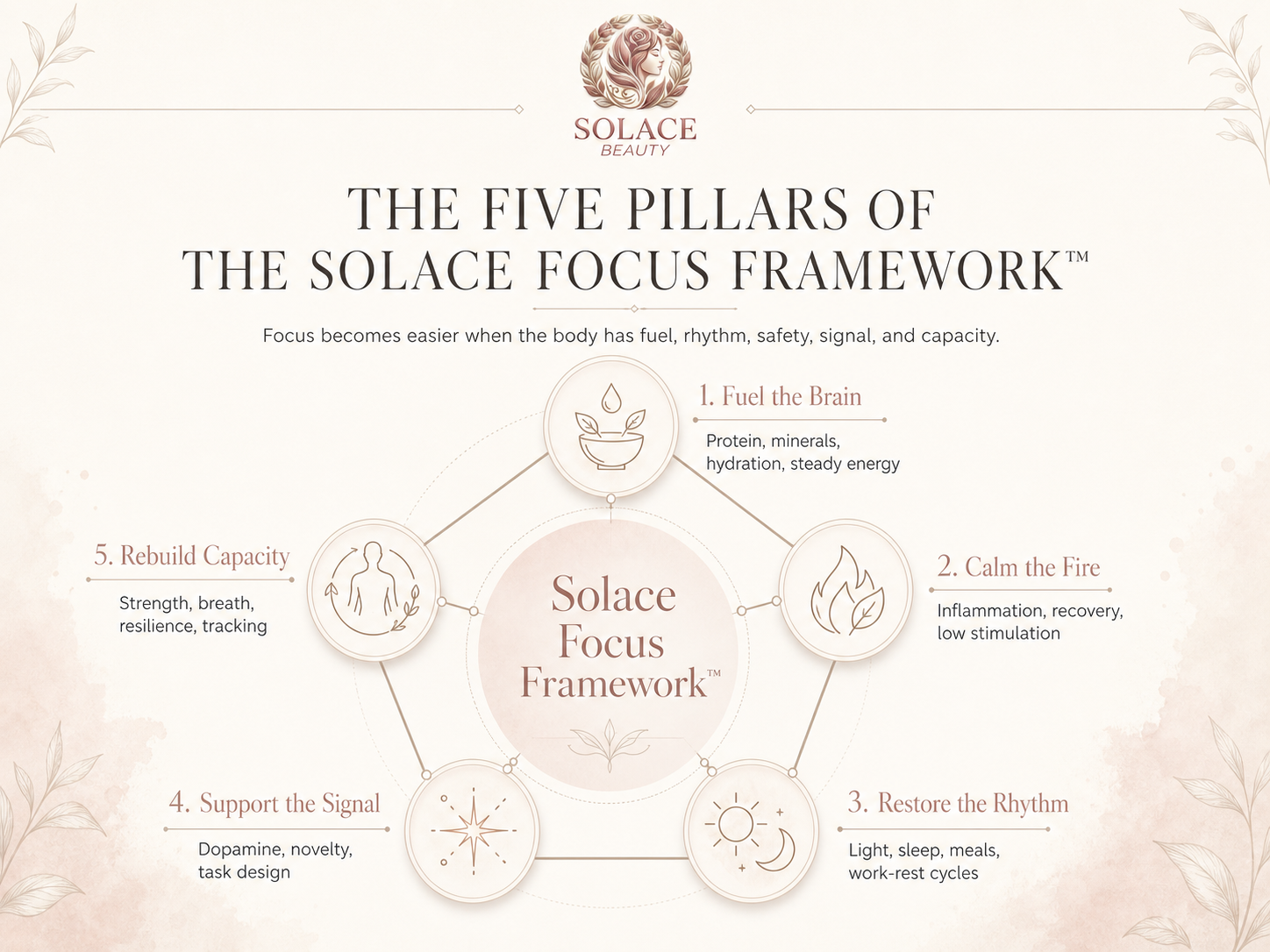
ADHD-Like Symptoms as Biological Signals
In this framework, we view symptoms, distractibility, time perception shifts, the "pile system," or the heavy resistance of low-reward tasks, as biological feedback. Your body is not failing you; it is communicating its current state of energy, signaling, and repair.
The Eight Layers of Body Intelligence
To understand your focus, we look at eight distinct biological and experiential layers:
- Lived Experience Layer: Recognizing the unique ways your focus manifests (e.g., hyperfocus vs. procrastination).
- Attention + Perception Layer: How your brain selects signals and filters out environmental noise.
- Dopamine + Signal Layer: The strength and clarity of your "pursuit" neurochemistry.
- Brain Network Layer: The rhythm and timing between your "idle" mind and your "task" mind.
- Terrain Layer: The nutritional and environmental environment supporting your brain (Omega-3s, sugar, sensitivities).
- Energy + Inflammation Layer: The availability of cellular fuel (ATP) and the level of biological "static" in the system.
- Advanced Systems-Repair Layer: The advanced signaling tools that support barrier integrity and neuroplasticity.
- Training + Behavior Layer: The motor and visual tools used to teach the system how to hold attention.
Using the Map for Clarity
The purpose of this map is clarity, not overwhelm. No single layer explains everything, and focus rarely breaks in just one place. By viewing your system through these layers, you can identify which areas are asking for support and prioritize your next steps with intelligence rather than force.
Foundation, Signal, Repair, and Advanced Layers
To make the map practical for daily life, we simplify these eight layers into four actionable categories. This allows you to sequence your support, ensuring that you are building capacity rather than just pushing for performance.
1. The Foundation Layer
This is the "floor" of your attention system. Without a solid foundation, the brain cannot sustain the high metabolic cost of focus.
- Sleep: The master modulator of recovery and emotional regulation.
- Nutrition: Prioritizing protein and stable nourishment.
- Rhythm: Stabilizing blood sugar and noticing food sensitivities that create biological noise.
- Modulators: Utilizing evidence-based supports like Omega-3s and phosphatidylserine to support brain membranes.
2. The Signal Layer
This is the "Conductor" of your focus. It involves the neurochemistry that helps you select and pursue a target.
- Dopamine: Understanding motivation and the "pursuit" signal.
- Signal-to-Noise: Noticing how stimulation (caffeine, nicotine, or sugar) temporarily alters your focus.
- Clinical Support: Informed conversations with a clinician about stimulant medications and how they support task networks.
3. The Repair Layer
This is the "Hardware" of the system. It addresses the energy and integrity of the neurons themselves.
- Energy: Supporting ATP production and mitochondrial resilience.
- Integrity: Maintaining the "tight junctions" of the gut and blood-brain barriers.
- Environment: Supporting a lower-inflammation environment and efficient blood flow and oxygen delivery.
4. The Advanced Layer
These are the specialized signaling tools discussed in the source protocol. They are designed to support the system's repair pathways and signaling efficiency.
- Advanced Tools: Semax, BPC-157, Cerebrolysin, and Alpha-GPC.
- Precision: Discussing nootropics like racetams or Tesofensine in relation to membrane fluidity, dopaminergic signaling, and cognitive signal support.
- Sequence: Prioritizing repair and foundation before adding advanced signal optimization.
Choosing Where to Begin
The golden rule of the Solace Protocol is Sequence before Intensity. We do not jump to the Advanced Layer if the Foundation Layer is lacking. By supporting the system in order, you ensure that any signal support you use is supported by a steadier biological foundation.
What to Track, What to Ask, and Where to Begin
The most powerful data you have is your own observation. Before you change your protocol or introduce new tools, it is helpful to spend a period simply noticing how your focus moves through the world.
What to Track: Your Biological Data
You do not need to track everything. Choose three categories that feel most relevant to your current struggle:
- Focus Windows: When is focus most accessible? When does it collapse?
- Task Initiation: Which tasks trigger the most "heaviness" or resistance?
- Stimulation Patterns: When do you reach for caffeine or sugar? Does it make you feel focused or just jittery?
- The "Crash": Do you feel exhausted or emotionally reactive after a period of forced focus?
- Sleep & Energy: How does last night's sleep correlate with today's ability to filter distractions?
- Physical Needs: Does your body need to move or fidget to sustain mental attention?
- Hormonal Rhythm: Hormonal shifts may influence focus, energy, mood, and dopamine-related patterns.
Questions to Ask Yourself
- Does focus feel like "selecting a target" or "fighting a battle"?
- Is my environment providing too much "noise" for my current filtering capacity?
- Am I reaching for sugar because I enjoy it, or because I cannot start without it?
- What happens to my attention after I move my body or practice visual fixation?
Questions for Your Clinician
Bringing biological data to your doctor can transform your care. Consider these prompts:
- "I've tracked my focus windows and initiation gaps; based on this, are there any metabolic, nutrient, hormone, thyroid, iron, glucose/insulin, or inflammation markers that may be appropriate to evaluate?"
- "How should we distinguish between clinical ADHD and induced focus struggles from stress or environment?"
- "If we consider medication, how can we ensure we are also supporting the underlying energy and inflammatory terrain?"
- "I am learning about advanced repair signaling (peptides/nootropics); how can we discuss these responsibly within my plan?"
The 30-Day Implementation Map
This map is not a set of instructions; it is a period of discovery. The goal is to build trust with your attention system by observing its signals and offering it gentle, sequenced support.

DAYS 1–7: Observe the Signal
- The Goal: Baseline awareness.
- Action: Track your focus windows and cravings without trying to fix them.
- Practice: Try 30 seconds of visual fixation once a day to notice how your brain recruits attention.
- Observation: Notice what "noise" (distractions) your brain struggles to filter out.
DAYS 8–14: Stabilize the Foundation
- The Goal: Support the biological floor.
- Action: Focus on sleep timing and meal consistency. Notice how steadier blood sugar affects your "initiation gap."
- Support: If appropriate, review omega-3 intake or supplementation questions with a qualified professional.
- Rhythm: Add five minutes of movement or "shuttling" energy before your most difficult focus block.
DAYS 15–21: Train the Focus System
- The Goal: Skill-building without shame.
- Action: Use visual fixation as a "primer" before low-reward tasks.
- Behavior: Intentionally allow fidgeting or pacing during focus blocks.
- Mindset: Practice shame-free observation. If you get distracted, simply notice what competing signal was "louder."
DAYS 22–30: Prepare for Deeper Support
- The Goal: Integration and planning.
- Action: Review your tracking data. Which layer (Foundation, Signal, Repair, Advanced) seems most under-supported?
- Preparation: Organize your questions for your clinician.
- Next Steps: Decide on one or two long-term supports to maintain, whether nutritional, behavioral, or advanced.
Beyond the 30 Days
Consistency is built biologically, not forced emotionally. After 30 days, you will have a personalized map of what your focus responds to, and a clearer sense of which layer may need support next.
You now have a map. Not a label. Not a sentence. A map. From here, the final step is learning how to relate to your focus system with clarity, compassion, and respect for the biology beneath it.
Peptide, Supplement, and Nootropic Overview
The goal of this chapter is not to tell you what to take. The goal is to help you understand what each tool is doing inside the larger map, so you can have more informed conversations and make better decisions with the right support.
This is not a random "stack" or a shopping list; it is a mechanism overview. As you move through these tools, I want you to think in layers. We are looking at the biology, not just the products. By understanding the "why" behind each compound, you can move from guessing to strategy.
Section 1: Foundation Support
Before we look at advanced signaling, we must address the structural integrity of the brain. These tools support the "floor" of your attention system.
- Omega-3 Fatty Acids (EPA / DHA): These include essential fatty acids that the body must obtain through diet or supplementation. They are the building blocks of brain cell membranes. In this framework, EPA is discussed for its role in mood and broader biological support, while DHA is highlighted in attention-related studies. They are modulatory, meaning they improve the environment in which signaling occurs rather than forcing a signal to happen. Layer supported: Foundation + Membrane/Signaling.
- Phosphatidylserine: A fatty substance called a phospholipid. It covers and protects the cells in your brain and carries messages between them. It is discussed in this protocol for its potential to support brain-cell membranes and signaling, specifically helping with attention and impulsivity. Layer supported: Foundation + Membrane support.
- Sleep, Rhythm, and Nutrition: These are not supplements, but they are core components of your terrain. Sleep supports the biological systems involved in attention, emotion, and recovery. Nutrition provides the amino acids and energy needed for neurotransmitter production. We also look at sugar and food sensitivity patterns as variables that can either stabilize or disrupt your internal environment. Layer supported: Foundation.
Section 2: Terrain + Repair Support
Once the foundation is set, we look at the energy capacity and "noise" levels of the system.
- ATP and Mitochondrial Support: ATP is the energy currency of your cells. Focus and executive function are biologically demanding; they require a high and constant supply of fuel. By supporting the mitochondria (the energy producers), we address the "initiation gap" and the stamina needed for sustained attention. Layer supported: Energy + Repair.
- Blood Flow, Oxygen, and Glucose Delivery: The brain requires a steady stream of substrate to perform. Supporting cerebral blood flow ensures that oxygen and glucose reach the neurons that are working hardest. Layer supported: Repair + Energy Delivery.
- Neuroinflammation and Biological Noise: Inflammation in the brain creates biological "static" or noise. This noise makes it harder for dopamine to coordinate circuits. The goal is to understand how a lower-noise internal environment may support clearer signaling and focus. Layer supported: Repair + Noise Reduction.
Section 3: Advanced Systems-Repair Tools
These tools are positioned in the advanced layer because they engage directly with the repair and protection pathways of the nervous system.
- Semax: In the source framework, this heptapeptide is discussed in relation to neuroplasticity. It interacts with BDNF, NGF, and CREB, the growth factors that tell neurons to repair and grow. It is also positioned as support for ATP production, mitochondrial resilience, and cerebral blood flow, while offering protection to dopamine neurons. Layer supported: Advanced Repair + Neuroplasticity + Dopamine-System Support.
- BPC-157: Short for "Body Protection Compound," it is discussed for its role in barrier integrity. This includes the gut barrier and the blood-brain barrier. In the source framework, BPC-157 is discussed in relation to tight junctions, nitric oxide pathways, vascular function, LPS-related inflammatory signaling, and barrier integrity. Layer supported: Advanced Repair + Barrier Integrity + Inflammation Signaling.
- Cerebrolysin: Positioned as a tool for deep neuroplasticity and neuronal repair. It contains a mixture of neurotrophic factors discussed in the source for protecting against excitotoxicity (neuronal over-firing) and supporting mitochondrial health. Layer supported: Advanced Repair + Neuroplasticity.
Section 4: Signal + Cognitive Support Tools
These tools are designed to optimize the "Conductor" and the clarity of the focus signal.
- Alpha-GPC: A choline precursor that supports acetylcholine, the neurotransmitter of attention and memory. It provides membrane building blocks (phosphatidylcholine) and is noted in the source for its potential to support growth hormone levels. Layer supported: Signal + Acetylcholine + Membrane Support.
- Aniracetam and Oxiracetam: Part of the "racetam" category of nootropics. They are discussed in relation to membrane fluidity and AMPA receptors, supporting cognitive signal efficiency in the source framework. Layer supported: Signal + Cognitive Support.
- Tesofensine: A monoamine reuptake inhibitor that interacts with dopamine, norepinephrine, and serotonin. It is positioned as an advanced tool for dopaminergic optimization. In the source logic, it is also discussed for neuroprotective aspects, including GDNF (Glial cell-derived neurotrophic factor) and the reduction of apoptosis (cell death). Layer supported: Advanced Signal Optimization.
- Nicotine (Alpha-7 Nicotinic Acetylcholine Receptor Agonism): Discussed for its ability to activate specific receptors that stimulate dopamine neurons and promote neuroplasticity. The source emphasizes delivery method, steady activation, such as patches, rather than a rapid "bolus", as an important distinction in how the compound is discussed. Do not present this as a recommendation to use nicotine. Layer supported: Signal + Acetylcholine/Dopamine Support.
Section 5: How to Think About Sequence
The question is not "What should I take?" The better question is: "Which layer of my system is asking for support?"
At Solace, we prioritize Sequence before Intensity. Stacking advanced tools without a foundation is often why people feel "wired but tired" or experience crashes.
- Foundation First: You cannot out-supplement a lack of sleep or poor nutrition.
- Repair before Optimization: Seal the barriers and restore energy capacity before you try to push signal harder.
- Signal Support after Terrain Support: A clear signal works best in a steadier, better-supported environment.
Section 6: Questions to Bring to a Clinician
Advanced tools require discernment. Use these prompts to bridge the gap between this educational map and your clinical care:
- Based on my patterns and tracking, which layer (Foundation, Signal, Repair, or Advanced) seems most under-supported right now?
- Are there any metabolic, nutrient, hormone, thyroid, iron, glucose/insulin, or inflammation markers that would be appropriate to evaluate for my terrain?
- Could medication or signal support be a helpful part of my broader plan?
- If I am interested in exploring peptides or nootropics, what are the specific risks, contraindications, or monitoring steps we should consider?
- How can we ensure I am not "stacking" tools in a way that creates more strain on my system?
Now that every layer has been mapped, from lived symptoms to biology, terrain, advanced support, behavioral training, and implementation, the final step is not more information. It is integration.
You Now Have a Map
We began this journey by looking at the lived experience of ADHD, the "pile" systems, the time blindness, and the heavy, physical resistance of low-reward tasks. For most women, these experiences have historically been viewed through the lens of character. We were told we were lazy, undisciplined, or simply not trying hard enough.
Through the Solace ADHD Protocol™, we have replaced that outdated narrative with a biological map. You now understand that your focus is not a reflection of your intelligence or your worth; it is a visible signal shaped by your internal terrain.
The Shift From Shame to Biology
The most important shift you can make is moving away from the idea that you are "broken." When you understand that attention is perception, and that your brain may be struggling to filter an ocean of sensory noise, the shame begins to dissolve.
Shame is not a focus tool. It creates a state of internal stress that only further fragments your attention. By shifting your perspective to biology, you move from judgment to agency. You are no longer "fighting" yourself; you are learning to support a complex, integrated system that has specific requirements for fuel, signaling, and repair.
A Layered View of Focus
Focus is a high-demand biological state that exists in layers. Throughout this guide, we have explored how these layers interact:
- The Foundation: Where sleep, nutrition, and blood sugar stability create the "floor" for your attention.
- The Signal: Where dopamine and brain-network rhythm act as the conductor for your focus.
- The Repair: Where ATP, mitochondrial health, and barrier integrity ensure the "hardware" of your brain is functional.
- The Training: Where visual and motor tools teach your brain how to select and hold attention.
Sequence Over Intensity
If there is one principle to carry forward, let it be this: support the layers; do not force the system. Simply pushing for more "signal" through stimulants or sheer willpower often feels incomplete because the terrain underneath remains under-supported. At Solace Beauty, we prioritize sequence over intensity. We repair the foundation and the barriers before we optimize the advanced signaling pathways. This ensures that focus becomes a state of ease rather than a state of perpetual strain.
A Final Word on Advanced Tools
We have discussed advanced tools, including Semax, BPC-157, Cerebrolysin, and nootropics like Alpha-GPC, not as "hacks," but as part of a sophisticated, source-informed conversation about systems repair.
These tools belong in a layered protocol where they support neuroplasticity, energy production, and barrier integrity. They are part of a larger map that requires discernment, clinical partnership, and a respect for the complexity of your biology.
You Are Not Broken
You are not lazy. You are not "less than" because your brain navigates the world differently. Your focus system may simply be asking for support across multiple layers.
The goal is not to push yourself harder until you burn out. The goal is to understand your biology clearly enough to support it with intelligence. You now have the map. You have the tracking tools. And you have the understanding that focus is a capacity you can build, nourish, and protect.
Move forward with clarity, calm, and the confidence that your system is restorable.
Continue Learning With Solace Beauty
The Solace ADHD Protocol™ is just one chapter in the larger story of your body intelligence. At Solace Beauty, we believe that beauty is the most visible signal of your internal biology. Whether we are discussing the focus of your mind, the resilience of your metabolism, or the health of your skin and hair, we are always looking at the terrain beneath the surface.
What We Explore Next
- Brain Energy & Executive Function: Refining the fuel delivery to your most demanding neural circuits.
- Hormonal Intelligence: Understanding how the rhythms of your cycle modulate your dopamine, mood, and focus.
- The Advanced Repair Layer: Continuing education on peptides, nootropics, and the future of systemic recovery.
- Visible Signals: How your internal repair capacity manifests in your skin, hair, and metabolic vitality.
Stay Connected
We invite you to remain part of our community as we release future body-intelligence guides and protocols. Our goal is to provide you with the science-forward education you need to navigate your wellness with discernment and grace.
Continue learning with Solace Beauty for future body-intelligence guides and protocols designed to help you understand your body with clarity, calm, and confidence.
Continue your body-intelligence journey at Solace Beauty.
Visit Solace Beauty© Solace Beauty · The Solace ADHD Protocol™