Educational note

This web edition is presented as a body-intelligence guide to lab awareness, troubleshooting patterns, and provider-guided context. Use it as a calmer structure for noticing stalls before guessing.

Available Now$27Purchase disabled
Checkout is being prepared.
Solace Beauty
By Solace Beauty

The Solace Reta
Troubleshooting Map

Why Reta may stall, what your labs may reveal, and how to understand your body's next signal.

A provider-guided lab-awareness guide
A Note on Your Journey & Safety

Begin with intention, read with care.

Safety & Intent

Educational and lab-awareness only. Not medical advice, diagnosis, treatment, or a protocol for adjusting Retatrutide, medications, peptides, supplements, fasting, or diet. Review all markers and decisions with a qualified provider.

This guide is curated for educational and lab-awareness purposes only. It is intended to deepen your understanding of your body's internal signals and is not a substitute for medical advice, professional diagnosis, or treatment.

The insights shared here are not a protocol for adjusting medications, peptides, supplements, fasting, or dietary choices. We believe that true body intelligence is a collaborative process; therefore, you should not stop, start, adjust, or combine any peptide therapy or medication without the direct guidance of a qualified healthcare professional.

All lab markers and patterns discussed are meant to empower you with better questions for your provider. Every biological terrain is unique, and advanced signaling tools like Retatrutide should always be managed within a supportive, professional medical framework.

A Letter From Solace

You were consistent.

You stayed consistent with the rhythm of your plan, honoring the commitment you made to your health and your future. For a time, the results were visible, and the path felt clear. But then, the progress grew quiet. The scale plateaued, your energy felt less reliable, and the “food noise” you thought had been silenced began to return.

In these moments, the common advice is often to apply more force, to increase the dose, to push harder, or to assume that your body is simply being resistant.

At Solace Beauty, we look at this silence differently.

Your body is not working against you. It is simply asking for a better map.

A plateau is not a sign of failure. It is a biological signal that you may have reached what we call a “metabolic ceiling.” In this framework, the core truth is often this: Retatrutide may not be failing. Instead, your body may be hitting a deeper threshold where the signal is present, but your internal systems are currently unable to receive, convert, or execute that signal efficiently.

This ceiling is rarely the result of one single factor. It is often a complex conversation between the deeper systems beneath the signal: your insulin signaling, thyroid conversion, mitochondrial energy, liver stress, systemic inflammation, and cortisol rhythm.

When these foundations are under strain, increasing the dose of a peptide is like pressing the gas pedal in a car that is low on oil. It creates more friction, not more speed.

The purpose of The Solace Reta Troubleshooting Map™ is to help you move from guessing to listening. We want to guide you through the labs and the logic that help reveal where the system might be stalled. By understanding the biology of your unique terrain, you can move away from the frustration of a plateau and toward a more intelligent, provider-guided path to restoration.

With calm and clarity,
Solace Beauty

Part One

The Plateau Is a Signal

A pause is not always failure. Sometimes it is feedback.

Section One
01

When Reta Stops Feeling Like It's Working

When progress shifts from a steady rhythm to a quiet stall, the natural impulse is to assume the signal has failed or that the body has simply built a tolerance to the instructions it is receiving.

Section Two
02

The Metabolic Ceiling

In this model, your metabolism is viewed as a sophisticated manufacturing plant with three separate divisions that must work in harmony to produce results. A stall rarely happens because the “instruction manual” is missing. It happens because there is a failure in the conversion or the structure of the plant itself.

More signal does not create more response if the body cannot receive, convert, or execute the signal.

Most troubleshooting stops at the first layer, assuming that a plateau requires a louder signal, or a higher dose. But if the deeper systems are under strain, the signal is essentially screaming into an unresponsive room. To break through a metabolic ceiling, we must identify which layer of the system has stopped listening.

Part Two

The Three-Layer Reta Troubleshooting Model

Signal. Conversion. Hardware. Three divisions of one quiet plant.

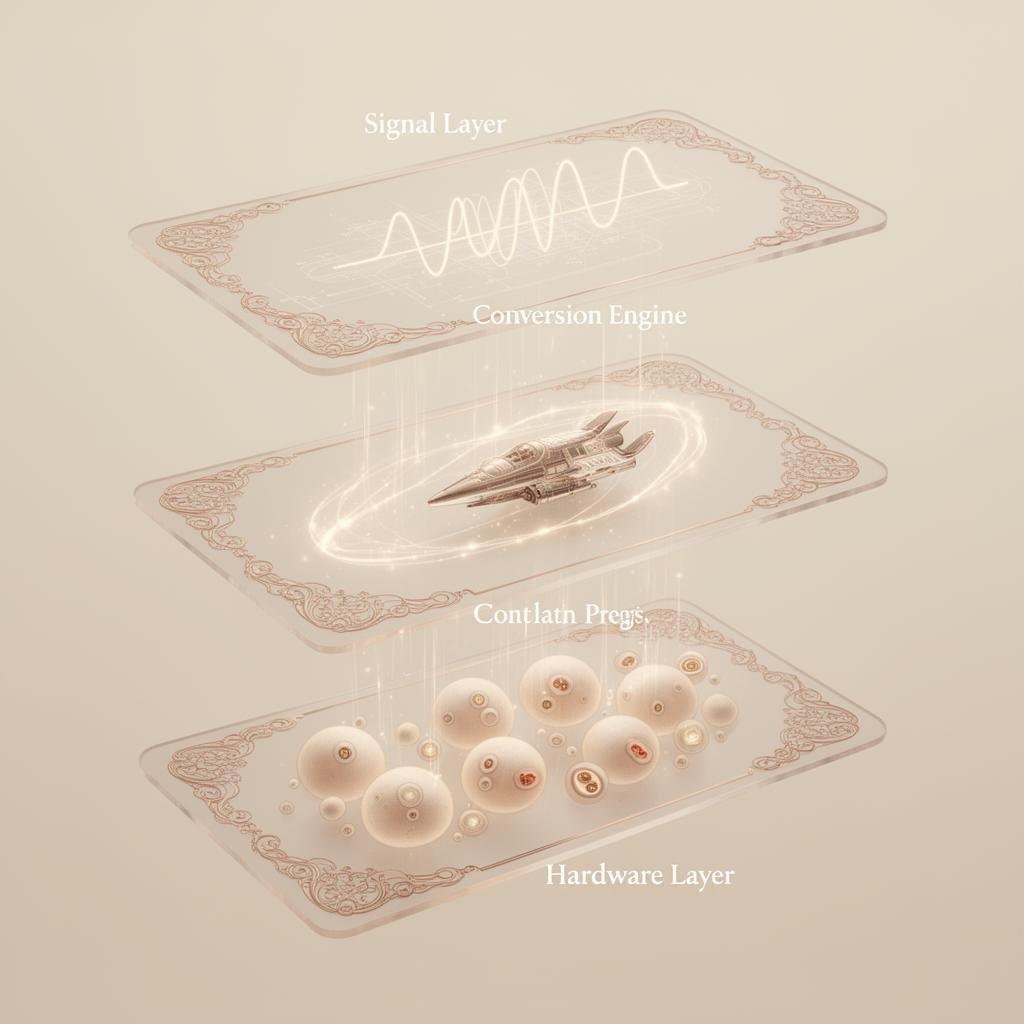
Three luxury translucent cards stacked, representing the Signal Layer, Conversion Engine, and Hardware Layer.
The Three-Layer Troubleshooting Model
Section Three
03

The Three Layers of a Reta Stall

In this troubleshooting framework, we categorize a stall into three distinct layers:

01
Signal Layer

Is the message being sent?

02
Conversion Engine

Can the body turn that signal into metabolic action?

03
Hardware Layer

Are the cells physically capable of responding?

Section Four
04

Layer One: The Signal Layer

The Signal Layer is the information layer of your biology. This is the primary home of Retatrutide. Retatrutide is a sophisticated signaling tool that interacts with three specific pathways: the GLP-1, GIP, and Glucagon receptors.

When part of your plan, the signal is likely present, providing your body with a complex set of instructions: optimize appetite signaling, stabilize glucose pathways, and initiate the fat-burning conversation.

If the signal is present but progress has hit a ceiling, we must look deeper. We cannot solve a structural or execution problem by simply making the blueprint louder. We must move into the engine that is supposed to carry those orders out.

Section Five
05

Layer Two: The Conversion Engine

Once the signal is sent, your body must convert that information into physical execution. This is the work of Division Two, driven primarily by the thyroid-mitochondrial axis. The active thyroid hormone, Free T3, is central. The Troubleshooting Map looks closer at the relationship between Free T3 and Reverse T3 to understand the true metabolic speed.

For fat-burning orders to be followed, Free T3 must enter the nucleus of your cells. Once there, it activates the specific genes required to build fat-burning enzymes. One of the most critical is CPT1 (Carnitine Palmitoyltransferase 1), which functions as a shuttle that physically moves long-chain fatty acids into the mitochondrial matrix for beta-oxidation. Without adequate Free T3, the expression of CPT1 can drop significantly.

This conversion engine also requires specific cofactors to function. Selenium, Zinc, and Ferritin are essential for proper conversion, receptor stability, and hormone transport. If these nutrients are depleted, the conversion engine stalls, leaving the metabolic signal unread.

Section Six
06

Layer Three: The Hardware Layer

The Structural or Hardware Layer is the physical ability of your cells to respond to the metabolic conversation. If the Signal is the instruction and the Engine is the worker, the Hardware is the machinery itself.

This involves Insulin Receptors (the cellular “doors” that must be sensitive enough to hear the signal), Mitochondrial Membranes (intact enough to support the proton gradient that drives ATP production), and Metabolic Flexibility (the system's ability to shift between burning glucose and burning fat).

We also review the Triglyceride/HDL ratio to understand metabolic flexibility. If this ratio is elevated, your mitochondria may be locked in a glucose-only mode, unable to recognize or utilize fat as an available fuel source.

Part Three

The Hidden Blockers

The deeper terrain beneath the signal.

A central glowing node connected by rose-gold filigree to four cards: liver, inflammation, mitochondria, cortisol.
Hidden Blockers Beneath the Signal
Section Seven
07

The Liver Conversion Layer

In this framework, the liver is seen as a vital partner in the metabolic conversation. The liver is a primary site for thyroid hormone conversion. It produces and supports the activity of D1 deiodinase, the enzyme responsible for converting the inactive storage hormone (T4) into the active metabolic hormone (T3). It also synthesizes Albumin, a crucial transport protein that carries thyroid hormones through the bloodstream to your target tissues.

Takeaway: The liver is a central architect of metabolic speed. These markers are intended to support a provider-guided review of liver stress, thyroid conversion, and hormone transport.

Section Eight
08

The Inflammation Layer

When the body is in a state of chronic inflammation, it creates a kind of biological static that can mute even the strongest metabolic signals. Systemic inflammation involves signaling molecules called cytokines, such as IL-6 and TNF-alpha, which can interfere directly with insulin receptor signaling.

Section Nine
09

The Mitochondrial Energy Layer

Retatrutide asks the body to utilize stored fuel, but for that fuel to be turned into energy, the cellular machinery must be functional. For fat oxidation to occur, long-chain fatty acids must be transported into the mitochondrial matrix. This depends on Carnitine and the enzyme CPT1. Furthermore, the actual production of ATP requires CoQ10 to shuttle electrons through the energy chain.

Section Ten
10

The Cortisol Shutdown Layer

The most sophisticated signaling tool cannot overcome a body that perceives itself to be unsafe. High levels of Cortisol tell the body to protect its energy stores. Sustained cortisol elevation is directly connected to the production of Reverse T3, the metabolic bouncer that fits into thyroid receptors but cannot turn the lock.

Part Four

The Solace Reta Lab Map™

From intuition to insight, organized with care.

A tiered diagram resembling a soft cake of three translucent levels, Primary, Secondary, Advanced, with luminous lab-dot constellations.
Primary · Secondary · Advanced: The Lab Priority Map
Section Eleven
11

The Lab Priority Map

Understanding the three layers and identifying possible hidden blockers is the first step in making sense of a stall. The purpose of this map is not to self-diagnose or replace clinical care. It is designed to help you move from guessing to clarity by organizing markers into a clear hierarchy you can bring to your provider.

Tier 1: Primary Labs

An initial look at insulin signaling, thyroid conversion, and systemic inflammatory load.

  • Insulin & Glucose: Fasting insulin, Fasting glucose, Triglycerides, HDL.
  • Thyroid Axis: Free T3, Reverse T3, TSH.
  • Foundational Markers: ALT, hs-CRP.

Tier 2: Secondary Labs

  • Nutrient Support: Selenium, Zinc, Ferritin.
  • Liver & Transport: GGT, Albumin.
  • Advanced Signaling: IL-6, TNF-alpha, CoQ10, Free carnitine.

Tier 3: Advanced Provider Review

  • Stress Physiology: 24-hour urinary free cortisol, Morning cortisol.
  • Mitochondrial Health: Lactate, LDH, CPK.

The Solace Lab Awareness Table

Insulin Signaling
Markers
Fasting insulin, fasting glucose, HOMA-IR
Explores
Sensitivity to fuel signals and metabolic flexibility.
Thyroid Conversion
Markers
Free T3, Reverse T3, TSH
Explores
The body's ability to execute metabolic instructions.
Nutrient Cofactors
Markers
Selenium, Zinc, Ferritin
Explores
Foundational support for conversion and transport.
Liver Stress
Markers
ALT, GGT, Albumin
Explores
Efficiency of conversion and oxidative stress levels.
Inflammation
Markers
hs-CRP, IL-6, TNF-alpha
Explores
Systemic “static” that may interfere with signaling.
Mitochondria
Markers
CoQ10, Carnitine, Lactate
Explores
Cellular energy infrastructure and fat oxidation capacity.
Cortisol Rhythm
Markers
Morning cortisol, 24-hour urinary cortisol
Explores
Stress load and energy conservation signaling.
Educational and lab-awareness only. Not medical advice, diagnosis, treatment, or a protocol for adjusting Retatrutide, medications, peptides, supplements, fasting, or diet. Review all markers and decisions with a qualified provider.
Reference Points

From the Source Framework

The following reference points are preserved from the source framework for educational awareness. They are not diagnostic cutoffs and should be interpreted only with a qualified provider, the lab's reference ranges, symptoms, medication history, and full clinical context. Values falling outside these ranges are viewed as possible areas for provider-guided review.

Insulin / Metabolic Flexibility
  • Fasting insulin
    Under 2 is described as optimal; over 10 is flagged as a red flag; over 15 is flagged as a severe concern.
  • HOMA-IR
    Less than 1 is described as preferred; greater than 2.5 is flagged as possible insulin resistance; values around 4 are flagged as a severe concern.
  • Triglyceride/HDL ratio
    Less than 2 is described as preferred; greater than 3 is flagged as possible insulin resistance; greater than 4 is flagged as dyslipidemic.
Thyroid Conversion
  • Free T3
    Greater than 3.5 and under 4 is described as a preferred fat-loss range. Levels less than 2 are flagged as low.
  • Reverse T3
    10–24 is described as a common range; greater than 25 is flagged as high; greater than 30 is flagged as a severe concern.
  • TSH
    0.4–4 is the common lab range; levels greater than 3 are flagged as a point of interest.
Nutrient Cofactors
  • Selenium
    Levels less than 100–110 are flagged for review.
  • Zinc
    Levels less than 75 are flagged for review.
  • Ferritin
    Levels less than 50 are flagged for review.
Liver Stress
  • ALT
    Levels greater than 30 are flagged.
  • GGT
    Levels greater than 25 are flagged.
  • Albumin
    Levels less than 3.8 are flagged.
Inflammation
  • hs-CRP
    Less than 1 is described as preferred; greater than 2.5 or 3 is flagged.
  • IL-6
    Levels greater than 3 are flagged.
  • TNF-alpha
    Levels greater than 2.5 are flagged.
Mitochondrial Energy
  • CoQ10
    Levels less than 0.7 are flagged.
  • Lactate
    Levels greater than 2.2 or 2.5 are flagged as possible poor mitochondrial oxidative capacity.
  • Carnitine
    Low-normal levels (around 15–25) are discussed as a potential bottleneck.
Cortisol Rhythm
  • 24-hour urinary free cortisol
    Levels greater than 100 are flagged.
  • Morning cortisol
    Levels less than 10 are described as blunted; levels greater than 20 are described as elevated.
Part Five

The Plateau Pattern Decoder

When markers cluster, biology speaks in patterns.

A floral mandala with six soft petal segments around a central rose, each carrying a small symbolic icon.
Six Common Reta Stall Patterns
Educational and lab-awareness only. Not medical advice, diagnosis, treatment, or a protocol for adjusting Retatrutide, medications, peptides, supplements, fasting, or diet. Review all markers and decisions with a qualified provider.
Section Twelve
12

Six Common Reta Stall Patterns

While individual markers provide snapshots, biological patterns tell the deeper story. A single lab value rarely dictates the path forward, but when several markers move in unison, they reveal a pattern of behavior in your biology.

01

Insulin-Locked Stall

  • High fasting insulin
  • High HOMA-IR
  • High triglyceride/HDL ratio

The Hardware Layer of the cell may be struggling with insulin signaling and metabolic flexibility. When insulin remains chronically high, the body's cells often downregulate their receptors as a protective mechanism. Even when Retatrutide is sending a strong signal, the hardware layer may essentially be “deaf” to the message.

Within the source framework, this pattern may cluster around a fasting insulin over 10, a HOMA-IR greater than 2.5, and a triglyceride/HDL ratio greater than 3.

02

Thyroid-Conversion Stall

  • Low Free T3
  • High Reverse T3
  • Signs of systemic inflammation or stress

The Conversion Engine may not be translating metabolic signals into action efficiently. The instruction to burn fat is present, but active T3 is being blocked or under-produced. The body may be shunting resources toward Reverse T3, which fits into the receptor like a blocked key that cannot turn the metabolic lock.

Within the source framework, this pattern may cluster around a Free T3 less than 3 (or less than 2 as a more severe indicator), a Reverse T3 greater than 25, or a Reverse T3 greater than 30 as a sign of more severe concern.

03

Mitochondrial-Energy Stall

  • Low CoQ10
  • High resting lactate
  • Sub-optimal carnitine levels

The cellular energy system, the machinery of the cell, may require provider-guided review before fat oxidation can proceed efficiently. The mitochondria need physical infrastructure to process stored fuel into ATP.

Within the source framework, this pattern may cluster around a CoQ10 below 0.7, a resting lactate greater than 2.2 or 2.5, and carnitine levels in the low-normal range (around 15–25).

04

Liver-Stress Stall

  • Elevated ALT
  • Elevated GGT
  • Low albumin

Liver stress may be interfering with hormone conversion, hormone transport, or systemic inflammatory load. The liver is the primary architect of metabolic conversion and produces albumin, the protein vehicle that carries hormones through the blood.

Within the source framework, this pattern may cluster around an ALT greater than 30, a GGT greater than 25, and an albumin level below 3.8.

05

Inflammation-Fire Stall

  • Elevated hs-CRP
  • Elevated IL-6
  • Elevated TNF-alpha

Systemic inflammation may be creating biological resistance, making it difficult for the body to receive metabolic signals cleanly. Inflammation functions as biological static on the line.

Within the source framework, this pattern may cluster around an hs-CRP greater than 2.5 or 3, an IL-6 greater than 3, and a TNF-alpha greater than 2.5.

06

Cortisol-Survival Stall

  • High 24-hour urinary free cortisol
  • High or blunted morning cortisol
  • High Reverse T3

The body has shifted into a state of survival mode, prioritizing energy conservation and stress protection over fat loss. This pattern may deserve a provider-guided conversation about stress physiology, sleep rhythm, and recovery.

Within the source framework, this pattern may cluster around a 24-hour urinary free cortisol greater than 100, a morning cortisol less than 10 or greater than 20, and a high Reverse T3, especially levels greater than 25.

Bonuses

The Solace Workbook

Practical companions for your provider conversation.

Bonus One

The One-Page Solace Reta Troubleshooting Map™

Pocket Map

Five Steps

  1. Notice the stall. Progress feels inconsistent, the scale stops moving, hunger or food noise returns, energy feels uncharacteristically low.
  2. Ask which layer may be involved. Signal Layer, Conversion Engine, or Hardware Layer.
  3. Review hidden blockers. Liver stress, systemic inflammation, mitochondrial energy bottlenecks, or a disrupted cortisol rhythm.
  4. Organize labs. Primary first, then Secondary, then Advanced Provider Review.
  5. Bring better questions to your provider. Shift the conversation from increasing force to supporting the system.

Your body may not need more force. It may need a better map.

Bonus Two

Primary vs. Secondary Lab Checklist

This checklist is for educational organization only. It is not a lab order. Review with a qualified provider.

Educational Organization

Lab Checklist

Primary Labs
  • Fasting insulin
  • Fasting glucose
  • Free T3
  • Reverse T3
  • TSH
  • ALT
  • hs-CRP or CRP
  • Triglycerides
  • HDL
Secondary Labs
  • Selenium
  • Zinc
  • Ferritin
  • CoQ10
  • Free carnitine
  • GGT
  • Albumin
  • IL-6
  • TNF-alpha
Advanced Provider-Guided Review
  • 24-hour urinary free cortisol
  • Morning cortisol
  • Lactate
  • LDH
  • CPK
  • Other provider-directed markers
Bonus Three

Six Plateau Pattern Decoder

01

Insulin-Locked Stall

  • High fasting insulin
  • High HOMA-IR
  • High triglyceride/HDL ratio

The Hardware Layer of the cell may be struggling with insulin signaling and metabolic flexibility. When insulin remains chronically high, the body's cells often downregulate their receptors as a protective mechanism. Even when Retatrutide is sending a strong signal, the hardware layer may essentially be “deaf” to the message.

Within the source framework, this pattern may cluster around a fasting insulin over 10, a HOMA-IR greater than 2.5, and a triglyceride/HDL ratio greater than 3.

02

Thyroid-Conversion Stall

  • Low Free T3
  • High Reverse T3
  • Signs of systemic inflammation or stress

The Conversion Engine may not be translating metabolic signals into action efficiently. The instruction to burn fat is present, but active T3 is being blocked or under-produced. The body may be shunting resources toward Reverse T3, which fits into the receptor like a blocked key that cannot turn the metabolic lock.

Within the source framework, this pattern may cluster around a Free T3 less than 3 (or less than 2 as a more severe indicator), a Reverse T3 greater than 25, or a Reverse T3 greater than 30 as a sign of more severe concern.

03

Mitochondrial-Energy Stall

  • Low CoQ10
  • High resting lactate
  • Sub-optimal carnitine levels

The cellular energy system, the machinery of the cell, may require provider-guided review before fat oxidation can proceed efficiently. The mitochondria need physical infrastructure to process stored fuel into ATP.

Within the source framework, this pattern may cluster around a CoQ10 below 0.7, a resting lactate greater than 2.2 or 2.5, and carnitine levels in the low-normal range (around 15–25).

04

Liver-Stress Stall

  • Elevated ALT
  • Elevated GGT
  • Low albumin

Liver stress may be interfering with hormone conversion, hormone transport, or systemic inflammatory load. The liver is the primary architect of metabolic conversion and produces albumin, the protein vehicle that carries hormones through the blood.

Within the source framework, this pattern may cluster around an ALT greater than 30, a GGT greater than 25, and an albumin level below 3.8.

05

Inflammation-Fire Stall

  • Elevated hs-CRP
  • Elevated IL-6
  • Elevated TNF-alpha

Systemic inflammation may be creating biological resistance, making it difficult for the body to receive metabolic signals cleanly. Inflammation functions as biological static on the line.

Within the source framework, this pattern may cluster around an hs-CRP greater than 2.5 or 3, an IL-6 greater than 3, and a TNF-alpha greater than 2.5.

06

Cortisol-Survival Stall

  • High 24-hour urinary free cortisol
  • High or blunted morning cortisol
  • High Reverse T3

The body has shifted into a state of survival mode, prioritizing energy conservation and stress protection over fat loss. This pattern may deserve a provider-guided conversation about stress physiology, sleep rhythm, and recovery.

Within the source framework, this pattern may cluster around a 24-hour urinary free cortisol greater than 100, a morning cortisol less than 10 or greater than 20, and a high Reverse T3, especially levels greater than 25.

Bonus Four

Provider Conversation Checklist

For Your Visit

Questions to Bring

  • Metabolic Foundations: Review fasting insulin, glucose, and HOMA-IR together.
  • Lipid Dynamics: Discuss whether the Triglyceride/HDL ratio suggests fuel flexibility.
  • Thyroid Axis: Review Free T3 and Reverse T3 alongside TSH to assess execution.
  • Liver Terrain: Review ALT, GGT, and Albumin markers.
  • Inflammatory Load: Discuss hs-CRP, IL-6, or TNF-alpha status.
  • Mitochondrial Energy: Discuss CoQ10, carnitine, or lactate if the picture remains unclear.
  • Stress Physiology: Discuss cortisol rhythm, sleep, and stress patterns.
  • Full Context: Review all current peptides, medications, and supplements together.
  • Next Steps: Ask which markers, if any, may be appropriate to monitor over time.
Educational and lab-awareness only. Not medical advice, diagnosis, treatment, or a protocol for adjusting Retatrutide, medications, peptides, supplements, fasting, or diet. Review all markers and decisions with a qualified provider.
Bonus Five

Lab Tracker Worksheet

Track With Care

My Lab Map

  • Fasting insulin
    Under 2 described as optimal in source framework; over 10 flagged in source framework.
    DateResultRetest
  • Fasting glucose
    Provider-guided review.
    DateResultRetest
  • HOMA-IR
    Less than 1 described as preferred in source framework; greater than 2.5 flagged in source framework.
    DateResultRetest
  • Triglycerides
    Provider-guided review.
    DateResultRetest
  • HDL
    Provider-guided review.
    DateResultRetest
  • Free T3
    Greater than 3.5 and under 4 described as preferred fat-loss range in source framework; less than 2 flagged in source framework.
    DateResultRetest
  • Reverse T3
    10–24 described as normal range depending on lab in source framework; greater than 25 flagged in source framework.
    DateResultRetest
  • TSH
    Greater than 3 flagged in source framework.
    DateResultRetest
  • Selenium
    Less than 100–110 flagged in source framework.
    DateResultRetest
  • Zinc
    Less than 75 flagged in source framework.
    DateResultRetest
  • Ferritin
    Less than 50 flagged in source framework.
    DateResultRetest
  • ALT
    Greater than 30 flagged in source framework.
    DateResultRetest
  • GGT
    Greater than 25 flagged in source framework.
    DateResultRetest
  • Albumin
    Below 3.8 flagged in source framework.
    DateResultRetest
  • hs-CRP
    Less than 1 described as preferred in source framework; greater than 2.5 or 3 flagged in source framework.
    DateResultRetest
  • IL-6
    Greater than 3 flagged in source framework.
    DateResultRetest
  • TNF-alpha
    Greater than 2.5 flagged in source framework.
    DateResultRetest
  • CoQ10
    Below 0.7 flagged in source framework.
    DateResultRetest
  • Free carnitine
    Low-normal around 15–25 discussed in source framework.
    DateResultRetest
  • Lactate
    Greater than 2.2 or 2.5 flagged in source framework.
    DateResultRetest
  • Morning cortisol
    Less than 10 described as blunted in source framework; greater than 20 flagged in source framework.
    DateResultRetest
  • 24-hour urinary free cortisol
    Greater than 100 flagged in source framework.
    DateResultRetest
  • LDH
    Provider-guided review.
    DateResultRetest
  • CPK
    Provider-guided review.
    DateResultRetest
Educational and lab-awareness only. Not medical advice, diagnosis, treatment, or a protocol for adjusting Retatrutide, medications, peptides, supplements, fasting, or diet. Review all markers and decisions with a qualified provider.
Bonus Six

Symptom-to-System Map

A glowing feminine figure with rose-gold filigree pathways extending to small floating symbolic cards.
What you notice
Food noise returns
Possible system
Insulin Signaling
Markers to ask about
Fasting insulin, HOMA-IR
What you notice
Energy drops / Fatigue
Possible system
Mitochondrial Energy
Markers to ask about
CoQ10, Lactate, Carnitine
What you notice
Scale stalls / Cold hands
Possible system
Thyroid Conversion
Markers to ask about
Free T3, Reverse T3, Selenium
What you notice
Clothes stop changing
Possible system
Metabolic Flexibility
Markers to ask about
Triglyceride/HDL Ratio
What you notice
Poor sleep / High stress
Possible system
Cortisol Rhythm
Markers to ask about
Morning Cortisol, 24-Hr Cortisol
What you notice
Brain fog / Puffy skin
Possible system
Inflammatory Load
Markers to ask about
hs-CRP, IL-6, TNF-alpha
What you notice
Hair shedding
Possible system
Nutrient Cofactors
Markers to ask about
Ferritin, Zinc, T3
What you notice
Bloating / Digestion
Possible system
Liver & Inflammation
Markers to ask about
ALT, GGT, CRP
Bonus Seven

Marker Glossary

Tap any marker to expand its meaning.

Bonus Eight

What to Ask, Not What to Self-Diagnose

Instead of assuming

The peptide stopped working.

Ask this

Which layer of my metabolism may be limiting the response?

Instead of assuming

I need to increase the dose.

Ask this

Is the signal being received, converted, and executed efficiently by my body?

Instead of assuming

My thyroid is broken.

Ask this

Can we review my Free T3, Reverse T3, and TSH together to assess my conversion engine?

Instead of assuming

My metabolism is ruined.

Ask this

Are there signs of insulin signaling interference, inflammation, or cortisol stress causing a stall?

Instead of assuming

One lab result explains everything.

Ask this

What patterns do these markers form together regarding my metabolic hardware and signaling?

Closing

Continue learning with Solace Beauty.

For the broader foundation of glow protection, beauty preservation, and body-intelligent metabolic support, we invite you to explore The Solace Reta Glow Protocol™ as your primary companion guide.

You are no longer guessing. You are learning how to listen.

Download the Ebook PDF
Educational and lab-awareness only. Not medical advice, diagnosis, treatment, or a protocol for adjusting Retatrutide, medications, peptides, supplements, fasting, or diet. Review all markers and decisions with a qualified provider.
© Solace Beauty

Educational note

Use this guide as a framework for reflection, lab awareness, and better provider conversations. When you want to continue, the wider Solace ecosystem is here through ebooks, peptide education, the library, assessments, the journal, and contact pathways.